Total Pageviews

Translate

Monday, 14 March 2022

WEB PAGE NO. 2890 6th March 2022
First Picture: Iced Gems Second Picture Packet Iced Gems
Third Picture: Messrs Huntley and Palmer
Forth Picture: Singapore Iced Gems
The Iced Gem Biscuits These were always a treat from my Granny! The real name is Iced Gems and they were first made in 1850s (the biscuit part) by biscuit manufacturers Huntley and Palmers in Reading. Like many inventions, they were an accidental discovery as these biscuits shrunk and came out smaller than their intended size during a biscuit experimentation! The makers started selling them as Gems and subsequently added the icing bit in 1910 and as they say, there was no turning back. After a whole series of mergers/sell-offs, the production of these little guys now come under what is known as Jacob's today. The Huntley and Palmers brand today is a newly established biscuit company who bought the brand over from Danone when they sold it. It is interesting to see how different people from all corners of the world identify with these little biscuits. Many people in Singapore and Malaysia probably thought these were indigenous to our part of the world, often referred to as local old school snacks, since many of us grew up eating them.. They are locally known in Singapore/Malaysia as Biskut Ais Jem (malay transliteration), some also call them Belly Button biscuits, and probably more often than not, the terribly long name of ''those little biscuits with bits of colourful icing on them''. The local cousin of Iced Gems differ from the British originals in a few aspects - colour, taste and pointy-ness. Those found in Singapore have bright neon coloured icing of green, pink, yellow and white, compared to the muted colours of the Jacob's ones (though I wonder what colour Huntley & Palmers made them originally). The Singaporean ones are also far more pointy than Jacob's from what I see in pictures..! Do a quick search online for Iced Gems and you will find that there are many people who have fond childhood memories of eating them and sharing their stories on different forums. Everyone has a different method of eating them. Some eat the biscuits first and save the icing to savour at the end, others would bite off the icing first and throw away most of the biscuits or I'm sure some of you just chomp the whole thing down, perhaps even several at a time! dedicated to them. Stay in touch Peter
Web Page No 2892 20th March 2022😊 First Picture Pilot Cap
Second Picture: Fashion cap
Third Picture; Kids cap
Forth Picture: Competition cap
Bathing caps Being a bloke the bathing cap was never an item that really concerned but I do know that in some female circles they were reguarded as fashion statements. For most of us it was down to the seaside, change under a towel and in you went. The one thing that we had to watch is that if we were wearing a home knitted costume coming out of the water could be embarrassing. The swimming cap, swim cap or bathing cap, we remember were tightly fitted, skin-tight garments, often made from silicone, latex or lycra, but today are mainly worn by recreational and competitive swimmers. Swim caps are worn for various reasons: they can be worn to keep hair out of the swimmer's face, reduce drag, protect hair from chlorine or sun damage, keep hair dry, keep the head warm, or (sometimes in combination with earplugs) to keep water out of the ears. Originally swim caps were made of rubberized fabric during the early 20th century. By the 1920s, they were made of latex. The earliest chin strap caps were known as "aviator's style caps" as they resembled the strapped leather helmets of flyers of the day. During the 1940s, swim caps became scarce as rubber was needed for war materials. The permanent wave hairstyle for ladies took time to obtain and was expensive, so many women wanted to protect their hair while swimming. The 1950s saw decorated caps come into vogue, and during the 1960s, colorful flower petal swim caps became popular. Men's long hair styles of the late 1960s and early 1970s gave rise to increased use of swim caps, not by me they didn’t! Without swim cap requirements, wearing swim caps fell out of fashion during the 1970s. Recently, Toks Ahmed and Michael Chapman created a swim cap specifically designed for dreadlocks, hair weaves or extensions, and voluminous hair. They named it the Soul Cap, but it was banned from the 2021 Olympics in Tokyo because of its size and configuration. Its use in future Olympics is currently under review. Many swimmers have trouble finding a swim cap that keeps their hair dry. "Double capping"—wearing two swim caps—can provide a tighter swim cap seal. An inner silicone or latex swim cap pulled low over the ears worn under a second traditional style chin strap swim cap with an inner seal may provide the protection desired. Double capping is also used by participants of open water swimming to provide warmth. In order to make as smooth a surface as possible for maximum streamlining, sometimes an inner latex cap is put on, followed by swim goggles over the latex cap, and then second snug silicone swim cap is fitted over both. One bastion of the swim cap is upheld by the English "Channel Swimming and Piloting Federation" and the "Channel Swimming Association" state that "one standard swim cap" may be used for official English Channel record swims. The cap must be approved by the official observer who accompanies the swimmer on the pilot boat across the channel. "Standard swim caps" that have been used by English Channel swimmers of record over the years include solid rubber "tank" style swim caps, molded rubber swim caps with chin strap, bubble crepe rubber swim caps with chin strap, silicone swim caps and latex "racing" swim caps. Swim caps that have neoprene within the cap construction such as the "Barracuda Hothead", or that are completely made of neoprene are not allowed for record English Channel swims. Several other long distance swims such as the Santa Catalina Channel California swim have similar rules for record swims. Swim caps worn for open water swims should be of visible colours that contrast with the water so that observers may safely monitor them, and operators of vessels may see them. Today I need not worry about a swim cap today as I hair very little hair to worry about! Stay in touch Peter gsseditor@gmail.com

Wednesday, 9 March 2022

WEB PAGE NO. 13th March 2022 First Picture: Duffle Bag
Second Picture: Channel Airways
Third Picture: Portsmouth Airport
Forth Picture: Duffle Coat
When you were a young teenager did you ever collect those either sew on, or stick-on badges from the places that you and your family visited or went on holiday to. Once acquired the next job was to attach the badges to my red duffle bag, they were all the rage at the time. Remember them. A duffel bag was and still is a large bag made of either natural or synthetic historically with a top closure using a drawstring. Generally a duffel bag was often used by non-commissioned personnel in the military, and for travel, sports and recreation by civilians One of the first ports of call whenever we went away was the souvenir shop to try to find a badge I did not have. If I was lucky that town would have more than one. I remember on a school coach trip to Cheddar jn the second or third year I was lucky enough to acquire four badges on one trip. Cheddar Gorge, Goughs Caves, Cox’s Caves and nearby another from Wookey Hole. Mind you this trip was tinged with embarrassment when on the way home on the coach I was sick into a towel provided by Miss Crocker who promptly rolled it all up and gave it to me and I was told to have it washed and return to school clean. This I found deeply embarrassing so I hid the towel in my duffle bag and when I got home I sneaked it up the garden and hid it deep under one of our hedges. I never said a thing, no one asked for the towel back and as far as I am aware 60 years later it could still be there!!!!! As a family we never went abroad on holiday but we did fly to Guernsey twice for a weeks break. We flew Channel Airways from Portsmouth Airport. I understand that this was one of Freddie Lakers first ventures. Here in Guernsey I managed to find all sorts of badges some even with French writing on. I was one satisfied lad at the time and when I could get one from a visit to Herm and another to Sark I was over the moon. Looking back, I wondered what ever happened to that duffle bag and then of course was the whole era of the duffle coat, But that’s another story completely. Just to say I had two a navy blue one and a camel coloured one. Stay in touch Peter gsseditor@gmail.com

Wednesday, 2 March 2022

WEB PAGE NO. 2888 6th March 2022 Fanny Cradock First Picture: Fanny Craddock
Second Picture: Major Johnny Craddock
Third Picture: Gwen Troake
Forth Picture: Gwens book
You must all remember Phyllis Nan Sortain Pechey better known as Fanny Cradock, as she frequently appeared on television with her fourth husband Major Johnnie Cradock a slightly bumbling hen-pecked partner. She was born in Leytonstone, London and the birth was formally registered in West Ham. As a child she lived with her family, with her maternal grandparents. A plaque (with her name misspelled) can be found at Fairwood Court, Fairlop Road, London E11: "Fanny Craddock 1909–1994. On this site until 1930 stood a house called Apthorp, birthplace of the famous TV cookery expert Fanny Craddock; born Phyllis Pechey." Her fortunes began to change when she started work at various restaurants and was introduced to the works of Auguste Escoffier. Fanny and Johnnie Cradock began writing a column under the pen name of "Bon Viveur which appeared in The Daily Telegraph from 1950 to 1955. This sparked a theatre career, with the pair turning theatres into restaurants. Fanny would cook vast dishes that were served to the audience. They became known for their roast turkey, complete with stuffed head, tail feathers and wings. Complete with French accents, their act was one of a drunken hen-pecked husband and a domineering wife. At this time, they were known as Major and Mrs Cradock. She also wrote books under the names Frances Dale, Bon Viveur, Susan Leigh and Phyllis Cradock. In 1955 she recorded a pilot for what became a very successful BBC television series on cookery. Each year the BBC published a booklet giving a detailed account of every recipe Fanny demonstrated, allowing her to frequently say, "You'll find that recipe in the booklet, so I won't show you now." Fanny advocated bringing Escoffier-standard food into the British home and gave every recipe a French name. Her food looked extravagant, but was generally cost-effective, and Fanny seemed to care about her audience. As time went by, however, her food began to seem outdated, with her love of the piping bag and vegetable dyes. As she grew older, she applied more and more make-up and wore vast chiffon ballgowns on screen. She had always included relatives and friends in her television shows. Johnnie suffered a minor heart attack in the early 1970s and was replaced with the daughter of a friend, Jayne. Another assistant was Sarah, and there was a series of young men who did not last long. Throughout her television career, the Cradocks also worked for the British Gas Council, appearing at trade shows such as the Ideal Home Exhibition and making many "infomercials," instructing cooks, usually newlywed women, on how to use gas cookers for basic dishes. Despite the BBC's ban on advertising, she used only gas stoves in her television shows and often stated that she "hated" electric stoves and ovens. Her series Fanny Cradock Cooks for Christmas is the only one of several she made to have survived in the TV archives and to have been repeated in recent years and she appeared in twenty-four television series between 1955 and 1975. In 1976, Gwen Troake, a farmer’s wife from Devon, won the Cook of the Realm competition, leading to the BBC selecting her for its TV series The Big Time, where talented amateurs were given the opportunity to take part in a spectacular professional event. Gwen Troake was to organise a three-course Literary Lunch at The Dorchester in honour of the former Prime Minister Edward Heath, with Earl Mountbatten of Burma and other dignitaries in attendance, and asked Fanny Cradock, by then a tax exile in Ireland, along with chef Eugene Kaufeler, actor and gourmet Robert Morley, nutritionist Magnus Pyke and many other experts she admired to advise her. The result brought the end of Fanny Cradock's television career Gwen Troake went through her menu of seafood cocktail, duckling with a lemon jelly-and-cornstarch fortified bramble sauce and coffee cream dessert with rum. Her idea was that with seafood, water fowl and rum, the meal had a nautical "theme," which would appeal to Mr Heath’s love of sailing and also be an appropriate salute to the former Admiral Mountbatten. Fanny Cradock, grimacing and acting as if on the verge of gagging, told Gwen that her menu was far too rich and she would "never in a million years" serve a seafood cocktail before a duck. She appeared not to be familiar with the term "bramble," and when told it meant a blackberry, was horrified that it would be paired with a savoury duck, remonstrated that a sauce like that should be brushed on flan. She derisively declared that the jam in it was "too English" and that the English had never had a cuisine, erroneously claiming that "Yorkshire pudding came from Burgundy". While accepting that the dessert was delicious, she insisted that it was not suitable, as it was "too sickly" served after the sweetly-sauced, rich duck, countering Gwen’s numerous objections with "Yes, dear, but now you're among professionals." Fanny suggested that unless a salad and cheese dish was served afterward, as is done in France, then she should use small almond pastry barquettes filled with a palate-cleansing fruit sorbet with spun sugar sails, as this was equally suitable for the naval theme. Gwen kept insisting that she liked her signature coffee pudding with "nautical" rum in it, while Fanny Cradock appealed to her to think of her diners' taste buds and stomachs, and try to achieve a balance in her menu. Unfortunately, the replacement dessert was not executed properly, and Robert Morley said he felt that the original coffee pudding was perfect. The public were incensed at her eye-rolling rudeness and condescension, and felt that Fanny Cradock had ruined Gwens special day. The Daily Telegraph wrote "Not since 1940 can the people of England have risen in such unified wrath....". Fanny wrote a letter of apology to Gwen, but the BBC terminated her contract two weeks after the broadcast of the programme. She would never again present a cookery programme for the BBC. (Gwen by contrast, published A Country Cookbook of recipes the following year; it included the coffee cream dessert Fanny Cradock had vetoed). Fanny and Johnnie Cradock spent their final years at Bexhill on Sea. They became regulars on the chat show circuit, and also appeared on programmes such as The Generation Game and Blankety Blank. When she appeared on the television chat show Parkinson with Danny La Rue and it was revealed to her that La Rue was actually a female impersonator, she stormed off the set. She married four times, twice bigamously. She died following a stroke, on 27 December 1994, at the Ersham House Nursing Home, Hailsham, East Sussex. Johnny died in 1987. Stay in touch Peter gsseditor@gmail.com

Thursday, 24 February 2022

WEB PAGE NO. 2886 27th February 2022 First Picture: Sunlight Soap
Second Picture: Washing Line
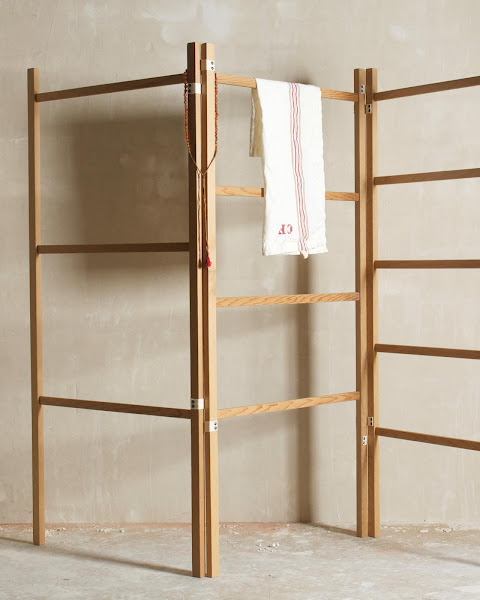
Third Picture: Clothes Horse
Forth Picture: Wash board
Random Thoughts on Washing Day.
Now to test the memory who remembers their mother or grandmother grating a block of yellowish green Sunlight Soap into the wating hot water so she could do the washing|? Also, the use of Reckitts Blue to keep the washing bright and white. Mind you Recketts Blue or Blue Bag had a secondary use, when dabbed on a bee or wasp sting it took away the sting. The big drawback on washing days was that, especially on boiling days, was that the whole of the kitchen, despite the back door and the window being opened and much of the ground floor was, for hours, wreathed in wet steam! Also one of the major pieces of equipment that was put to use at this time was the washing board, that’s if it not been ‘borrowed’ for use in a skiffle group, Once washed, rinsed, mangled and wrung it was time to try and dry the washing. We were lucky we had two washing lines, one high one attached to the top of the house and a normal one below it. On a good, windy drying day the back garden resembled a sailing ship in full sail as the various items flapped and swayed in the breeze. Rainy days were, of course, a nightmare as mother had to try and distribute the washing in front of or coal fire before father came home from work and we settled down in front of the living room fire for the evening. This is where the old wooden clothes horse came into its own. We always knew that on a wet washing day we would never be allowed to use the clothes horse as a tent for us to play in. Once the washing was done and dried it was time to iron it. I remember my grandmother having a fearsome green mottled gas iron which was plugged into a special terminal by the gas stove. This iron always seemed spit and splutter and appeared to me to be a very dangerous fire breathing article. Mind you she also had a gas fridge and I could never work out how that really worked. However, I still think that the most dangerous method of ironing was undertaken by my mother and millions of other women when they plugged the electric iron into the ceiling light in the kitchen something that is unheard of today. The one thing I have forgotten was the use of a flat iron heated up on the kitchen gas ring to the required temperature. I still have one of my grandmothers’ flat irons, I use it as a door stop, I also have my grandfather’s cobblers last which I use for the same purpose! These were the days when Monday was washing day for a good 75% of the population, today with automatic washing and drying machines that has seemed to go by the board and nowadays washing day is any day of the week. Stay in touch Peter gsseditor@gmail.com

Thursday, 17 February 2022

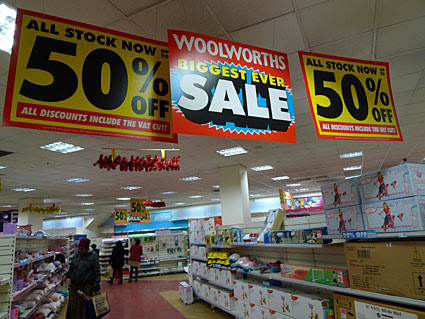
WEB PAGE NO. 2884 20h February 2022 First Picture: Goodbye Woolworths
Second Picture: Comet Closing Down Sale
Third Picture: Dusty Springfield at Radio Rentals
Forth Picture: FHW advert
High Street stores that have disappeared We all remember Woolworths going but here are a few more. Dixons. The electrical chain, founded in Southend, Essex, in 1937, closed in 2006. Many of its High Street branches were rebranded Currys. digital. Dixons remained as an online brand, but later this also came under Currys. But the Dixons name lives on through the Dixons Carphone brand and Dixons Travel, which operates at several UK airports.The Dixons name came when founder Charles Kalms flicked through a telephone directory, looking for inspiration. C&A. One would have thought that this store was a permanent fixture in all High Streets. The stores announced its withdrawal from the UK in 2000, with the loss of 4,800 jobs. Its 109 shops had come under increasing competition from other mid-market clothing retailers, such as Gap and Next, the company said. The last UK stores, in Hounslow, west London, and Bradford, closed in May 2001. Founded in the 1920s by the Dutch brothers Clemens and August Brenninkmeijer, C&A, at least in the UK, was accused of failing to move with fashion and recorded several losses in the late 1990s. Radio Rentals. Even with the help of Dusty Springfield at the Ideal Home Exhibition, Olympia the brand eventually failed when folk strted to buy TV sets and not rent them. Set up in a back street in Brighton in the 1930s, Radio Rentals catered for a growing demand for radios. The rental model continued through the introduction of television and, later, video cassette recorders - about to take off in 1976. During the late 1970s a newspaper advert for a long-play video recorder mocked a national obsession with the ITV soap opera Crossroads, known for its wobbly sets and criticised for the standard of its acting, stating: "It can take 16 episodes of Crossroads (if you can)." Radio Rentals gradually became amalgamated into the TV and domestic appliance rental firm BoxClever. The Radio Rentals brand continues in Australia. Freeman, Hardy and Willis another high steet name now gone. The shoe manufacturer, with beginnings in Leicester in the 1870s, became a familiar presences in hundreds of High Streets. A series of adverts in the 1950s referred to it as "our happy family shoe shop". Freeman, Hardy and Willis) became part of the British Shoe Corporation and ceased trading in the mid-1990s. Comet. Founded in 1933 as a business charging radio batteries, Comet opened its first store in Hull in 1968, expanding rapidly after that. There were 236 stores when it went into administration in November 2012, reduced to 49 by the time the final closures happened a month later. Comet ran up losses of £95m in the year to April 2012. Dewhurst The chain of butchers shops, founded on Merseyside in the late 19th Century, had 1,400 outlets by 1997 but went into administration in 2006. Its traditional model faced increasing competition the supermarkets started packaging meat in plastic containers . Stay in touch Peter gsseditor@gmail.com

Thursday, 10 February 2022

WEB PAGE NO. 2882 13th February 2022 BIGGLES First Picture: Biggles Book
Second Picture: Sopworth Camel
Third Picture: Biggles the flying ace
Forth Picture: Capt. Johns
I have to admit that as a youngster I could never get on with the Biggles stories James Bigglesworth, nicknamed "Biggles", is a fictional , adventurer and hero of the Biggles series of adventure books by W. E. Johns (1893–1968). Biggles made his first appearance in the story The White Fokker, published in the first issue of Popular Flying magazine and again as part of the first collection of Biggles stories, The Camels Are Coming (both 1932). Johns continued to write "Biggles books" until his death in 1968. The series eventually included nearly a hundred volumes. Biggles first appears as a teenaged "scout" (fighter) pilot in the Royal Flying Corps during WW1. He joined the RFC in 1916 at the age of 17, having conveniently "lost" his birth certificate. Biggles represents a British hero, combining professionalism with a gentlemanly air. Under the stress he develops from a hysterical youth prone to practical jokes to a calm, confident, competent leader. He is occasionally given "special" missions by the Colonel Raymond who is involved with the intelligence side of operations. Biggles is accompanied by his cousin Algernon ('Algy') Lacey and his mechanic Flight Sergeant Smyth, who accompany Biggles on his adventures after the war. Added to the team in 1935 is the teenager Ginger Hebblethwaite. W. E. Johns was himself a WW1 pilot, although his own career did not parallel that of Biggles He was commissioned as a second lieutenant in September 1917, seconded to the Royal Flying Corps and posted for flight training: he served as a flying instructor until August 1918, when he transferred to the Western Front. On 16 September 1918 his De Havilland DH4 was shot down on a bombing raid. His observer, Lieutenant Amey, was killed but he survived to be taken as a POW. He remained with the RAF until 1927: his final rank was Flying Officer rather than the "Capt." that formed part of his pen name. The bulk of the Biggles books are set after the First World War. Biggles has an unusually lengthy career, flying a number of aircraft from Sopwith Camels, Hurricanes and Spitfires in WW2 right up to the Hunter jet fighter. The books were popular and were eventually translated into Czech, Danish, Dutch, Finnish, Flemish, German, Hungarian, Icelandic, Italian, Norwegian, Portuguese, Spanish and Swedish.[1] According to stories in The Boy Biggles and Biggles Goes to School, James Bigglesworth was born in India in May 1899, the son of an administrator in the Indian Civil Service and his wife (née Lacey - hence his relation to the Hon. Algernon Montgomery Lacey - his flying companion, cousin and friend in a large proportion of his adventures). James was the younger of two sons, Charles being the elder by five years. The young James had little contact with European culture and commenced a lifelong affection for India, befriending the local Indian boys, exploring the countryside and learning to speak fluent Hindi. He retained a lifetime gift for languages and as an adult spoke French and German fluently, with a "fair command" of various other languages. He spent holidays in England, under the custody of an eccentric uncle and inventor who lived in rural Norfolk. Biggles then attended Malton Hall School in Hertbury. His first encounter with an aircraft was with a Blériot that landed on the school cricket ground. Characters Algernon Montgomery Lacey The Honourable Algernon Montgomery Lacey or "Algy" is a cousin who is posted to Biggles' flight in 266 Squadron by the influence of his aunt and eventually Algy adopts the role of Biggles' second in command. Ginger Hebblethwaite Ginger (his first name is never revealed) first appears in The Black Peril (1935) as a teenage runaway found hiding in a railway shed. Ginger left his father, a mineworker in Smettleworth, after an argument about Ginger's determination to become a pilot. When he first meets Biggles, he tells him he is on his way to London to join the RAF. Biggles immediately calls him Ginger because of his red hair.. He becomes one of the regular team and is often Biggles's chosen companion. He is a talented mechanic and his speech is peppered with youthful American slang learned from the cinema. Female characters In the Biggles stories, female characters appear infrequently. Despite brief affairs, Biggles and his chums remain steadfastly single. The settings of the Biggles books are spread over more than 50 years; this produces a number of credibility difficulties, especially for older readers. Though Biggles and his friends age in the books, they do so much more slowly than is historically credible. For instance, who by now should be well into their forties, is still a relatively junior squadron officer flying Spitfires during the Battle of Britain. In the stories set after the end of the Second World War, Biggles and Algy, in particular, are, by the rules of arithmetic, passing into their fifties and early sixties, while retaining levels of activity and lifestyle more typical of people at least thirty years younger. Since the Biggles books were first published, attitudes to race and ethnicity have changed. During the 1960s and 1970s a perception of Biggles as unacceptably racially prejudiced, especially considered as children's literature, drove Biggles from many public and school libraries. Capt. Johns himself said he was "completely non-political and non-racial" in his books. Stay in touch Peter gsseditor@gmail.com

Friday, 4 February 2022

WEB PAGE NO. 2880 6th February 2022 Mr Cube First Picture: Mr Cube
Second Picture: Sugar Packet with Mr C
Third Picture: Golden Syrup
Forth Picture: Mr C with weights
Mr Cube', an animated cartoon character born in July 1949 during rationing and nationalisation proposals. Mr Cube became sugar's brand image, the company logo of Tate & Lyle and a symbol of political embarrassment and electoral setback for the Labour government in the February 1950 General Election. The company's campaign strategist recalls how `they were strongly advised to have a cartoon character who, if he caught the public's imagination, could say the most outrageous things and get away with it, and who could act as a buffer between the public and Tate & Lyle'. Brandishing his sword of free enterprise and protected by his T&L shield, Mr Cube would `say sensible or outrageous things' allowing Tates to `concentrate on attacking the Socialist policy in a more dignified manner'. A brand-image was not just a mascot'; it actively shapd`corporate consciousness' of Tate & Lyle in 1949-50 and was heightened by Labour's nationalisation threats. Tate & Lyle were aware of American advertising and public relations methods and Mr Cube spearheaded the campaignon more than two million sugar packages, on 100,000 ration book holders distributed free to housewives by Tate & Lyle, and on all Tate & Lyle delivery trucks. The two main sources of `raw sugar' are tropical sugar-cane and temperate sugar-beet, alternative sources of supply which had produced `wars' between rival companies in the nineteenth century. After the two families of Tate and Lyle had merged in 1921, cane dominated their refining processes. The new company's nineteenth-century founding fathers, Henry Tate and Abraham Lyle, responded to competition from heavily subsidised Continental producers of sugar beet by `product differentiating' into cubes and syrup. The threat to Tates in 1949 did not come out of the blue. Two pre-Second World War books had flagged up many of the general arguments that would be directed against the company. In 1936 the government amalgamated eighteen sugar-beet factories into the British Sugar Corporation (BSC), forcing Tate & Lyle to divest itself of its sugar beet interests and change into an imperial sugar company with supplies secured from acquisition of sugar cane plantations in Jamaica and Trinidad. This provoked the impressive Mr Cube campaign. It even had its own Mr Cube dance tunes and poker dice game and from the end of July 1949, the comic hero, found his way on to millions of sugar packets. Mr Cube's catchy slogans featured `Take the S out of State', urged Mr Cube; `state control will make a hole in your pocket and my packet'. The simplest and most effective message was `Tate not State!' Shopkeepers passed on millions of leaflets, and `over-the-counter chit-chat informed harassed housewives that all the inconveniences of rationing and shortages stemmed from Labour Government bungling'. A sugar-sponsored film, called `All in Favour', was shown throughout the country in factories, workshops, men's clubs and women's institutes. Richard Dimbleby visited the refineries at Thames and Plaistow `with an open mind and an open mike' to search out the views of Tates' workers. A feature at the Schoolboy's Exhibition at the Horticultural Hall in January 1950 was `dialing Mr Cube and questioning him about sugar'. He figured prominently at the Ideal Home Exhibition as `the first mechanical man who has been made to speak correctly'. A six-foot Mr Cube was constructed and company president Lord Lyle, known to journalists as Lord Cubevisited. With a crowd of schoolboys around him, `he picked up the receiver and asked Mr Cube what he thought about nationalisation'. The answer from a very animated sugar lump was `the same as you do'! The King's speech after the 1950 election made no reference to Tates, and in 1951 Labour's new manifesto made no mention of the sugar refining industry. The strongest weapon in the campaign to reduce the Labour majority had turned out to be Mr Cube'. Stay in touch Peter gsseditor@gmail.com

Thursday, 27 January 2022

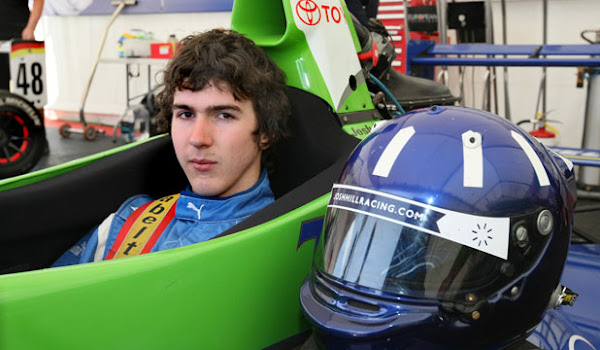
Second Picture Damon Hill
Forth Picture: BRM Racing Car
Norman Graham Hill OBE (15th February 1929 – 29th November 1975) was a British racing driver and team owner, who was the Formula One World Champion twice, winning in 1962 and 1968 as well as being runner up on three occasions (1963, 1964 and 1965). Despite not passing his driving test until 1953 when he was already 24 years of age, and only entering the world of motorsports a year later, Graham Hill would go on to become one of the greatest drivers of his generation. He is most celebrated for being the only driver ever to win the Triple Crown of Motorsport, an achievement which he defined as winning the Indianapolis 500, the 24 Hours of Le Mans, and the Formula One World Drivers' Championship. Graham Hill is still the only driver to have ever won the Triple Crown, winning at Monaco in such frequency in the 1960s (5x; 1963, 1964, 1965, 1968, 1969) that he became known as "Mr. Monaco". He crashed at the 1969 United States Grand Prix and was seriously injured, breaking both his legs and ending his season. Although he would recover and continue to race until 1975, his career would never again reach the same heights, and the Monaco Grand Prix victory earlier in 1969 would be his last victory in Formula One. Upon leaving the Brabham racing team he set up his own team in 1973, operating under the name Embassy Hill. He continued to race, however after failing to qualify for the 1975 Monaco Grand Prix he retired from driving in order to concentrate on the day-to-day operations of the team. Tragically that same year he and five other members of the Embassy Hill team were killed when the aeroplane he was piloting from France crashed in fog at night on Arkley golf course while attempting to land at Elstree Airfield in north London. With his son Damon they were the first father and son pair to win Formula One World Championships Damon's son, Josh, also raced his way through the ranks until he retired from Formula Three in 2013 at the age of 22. Before taking up motor racing, Graham Hill spent several years actively involved in rowing. Initially, he rowed at Southsea Rowing Club, while stationed in Portsmouth with the Royal Navy and at Auriol Rowing Club in Hammersmith. He met his future wife Bette at a Boxing Day party at Auriol and, while courting her, he also coached her clubmates at Stuart Ladies' Rowing Club on the River Lea. In 1952 he joined London Rowing Club, then as now one of the largest and most successful clubs in Great Britain. From 1952 to 1954, he rowed in twenty finals with London, usually as stroke of the crew, eight of which resulted in wins. He also stroked the London eight in the highly prestigious Grand Challenge Cup at Henley Royal Regatta, losing a semi-final to Union Sportif Metropolitaine des Transports, France by a length. Through his racing career he continued to support rowing and London. In 1968 when the club began a financial appeal to modernise its clubhouse, Hill launched proceedings by driving an old Morris Oxford, which had been obtained for £5, head-on into a boundary wall. He made three runs to reduce the wall to rubble, and the car was subsequently sold for £15. Graham Hill died on 29th November 1975 at the controls of his Piper PA-23 Aztec twin-engine light aircraft when it crashed near Arkley. The subsequent investigation revealed that the aircraft, originally registered in the US as N6645Y, had been removed from the FAA register and at the time of the accident was "unregistered and stateless", despite still displaying its original markings. Furthermore, Graham Hill's American FAA pilot certification had expired, as had his instrument rating. His UK IMC rating, which would have permitted him to fly in the weather conditions that prevailed at the time, was also out of date and invalid. He was effectively uninsured. The investigation into the crash was ultimately inconclusive, but pilot error was deemed the most likely explanation. His funeral was held at St Albans Abbey, and he is buried at St Botolph's graveyard, Shenleybury. The church has since been deconsecrated so the tomb now sits in a private garden. After his death, Silverstone village named a road, Graham Hill, after him and there is a "Graham Hill Road" on The Shires estate in nearby Towcester. Graham Hill Bend at Brands Hatch is also named in his honour. A blue plaque commemorates t 32 Parkside, in Mill Hill, London NW7. In Bourne, Lincolnshire, where his former team BRM is based, a road called Graham Hill Way is named in his honour. Also a nursery school in Lusevera, Italy, was named in his honour. Stay in touch Peter gsseditor@gmail.com >

Wednesday, 19 January 2022

WEB PAGE NO. 2876 21st January 2022
First Picture: Captain Pugwash
Second Picture Cut Throat Jake
Third Picture: The Crew
Forth Picture: Jim the Cabin Boy
Captain Pugwash By special request from a reader in New Zealand a look at Captain Pugwash Captain Horatio Pugwash made his debut in a comic-strip format in the first issue of The Eagle in 1950, then appeared regularly as a strip in Radio Times and was created by John Ryan. In 1957 the BBC commissioned a series of short cartoon films produced by Gordon Murray. Between 1957 and 1966, John Ryan produced a total of 58 five-minute-long episodes for the BBC, made in black-and-white. Between 1974 and 1975, a further 30 were made in a new series made in colour. He used a real-time technique of animation in which cardboard cutouts of the characters were laid on painted backgrounds and moved with levers. The characters' voices were provided by Peter Hawkins. The last series of Pugwash shorts by John Ryan was produced in 1975. A number of spin-off books were written by John Ryan, who in the 1980s drew three new Pugwash comic-strip storybooks: The Secret of the San Fiasco, The Battle of Bunkum Bay and The Quest for the Golden Handshake. A related book by John Ryan was Admiral Fatso Fitzpugwash, in which it is revealed that Pugwash had a medieval ancestor who was First Sea Lord, but who was terrified of water. Captain Pugwash was also sold to various overseas TV stations, including Australia's ABC Television. There the show was screened during weekday afternoons in the 1970s and 1980s. The rights to Captain Pugwash were purchased by The Britt Allcroft Company, which since 1997 has issued a number of digital and part computer-animated cartoon films based on the Pugwash character, set on the island of "Montebuffo", "somewhere in the Spanish Main". In 2005, a black and white episode of Captain Pugwash was repeated on BBC4 as part of the Animation Nation season. A DVD containing "All 30 heroic high sea adventures" from the second-generation colour 1974–75 series (156 minutes running time) was given away with the Sunday Times on 20 January 2008. The 1974-5 series was made available for streaming on BritBox in the United Kingdom in July 2021. Although the accompanying text claims the series is "digitally remastered", little or no restoration work seems to have been applied to the film prints. Characters Captain Pugwash The pompous but likeable captain of the Black Pig. Although he boasts of being the "bravest buccaneer", he is actually quite cowardly and stupid. His greed often gets him into trouble. Nevertheless, he usually wins the day – either with the help of Tom the Cabin Boy or by sheer luck. Despite being a pirate, he is rarely seen committing any acts of piracy. Master Mate A dopey character, who has a tendency to mispronounce common words. He has a teddy bear in his bunk and is quite mild-mannered. It is not entirely clear why he is the mate, as he does not appear to have any authority over the rest of the crew. He was present in the first ever Pugwash story, in which he was depicted as being constantly sleepy Barnabas The most aggressive of the pirates, but in reality just as harmless. He is quite rebellious and grumpy, and is perhaps marginally more intelligent than Willy, the Mate or the Captain. He was not present in the 1997 series. Willy A simple sailor from Wigan. He appears to be the youngest crew member (apart from Tom). He is gentle and is against using violence. He does, however, have the occasional brainwave and has been the crew's saviour "Just you wait till we get back to Wigan – we won't half have a 'tail' to tell!" Tom the Cabin Boy It might be argued that without Tom, Pugwash would have been sunk long ago. He is the most intelligent and resourceful member of the crew, the only one who can cook and the only one who can actually sail a ship. Although Pugwash would never admit it, Tom's ability to think up schemes is probably the only thing that prevents him from being a total failure as a pirate. The rest of the crew also found they were unable to operate without Tom, after he left with the captain when the crew mutinied. Tom is an expert concertina player. Cut-Throat Jake Captain Pugwash's fearsome arch-enemy, captain of the Flying Dustman . When he is not scheming to bring about Pugwash's downfall, he is a rather more competent pirate than his enemy, and always seems to have plenty of treasure. He speaks with a West Country accent, and is easily recognisable by his eye patch and enormous black beard. Pugwashisms Captain Pugwash is renowned for his exclamations, owing something to the style of Captain Haddock in The Adventures of Tintin: • "Dolloping doubloons/dolphins!" • "Coddling catfish!" • "Lolloping landlubbers!" • "Suffering seagulls!" • "Staggering stalactites!" • "Nautical nitwits!" • "Plundering porpoises!" • "Kipper me capstans!" • "Tottering turtles!" • "Dithering dogfish!" • "Scuttling cuttlefish!" • "Stuttering starfish!" • "Blistering barnacles!" • "Shuddering sharks!" Cut-Throat Jake has occasionally been known to utter the similar exclamation, "Scupper me skull-and-crossbones!" Theme The signature tune was the "Trumpet Hornpipe", a folk dance that dates to at least the early nineteenth century. The original black and white episodes of Captain Pugwash used a solo rendition by accordionist Tom Edmondson, who had learned the tune from watching Jimmy Shand's band in Northumberland as a teenager. Edmondson's version was recorded in the front room of his home in Harbottle, Northumberland, on 12 July 1954. The recording was made by folklorist Peter Kennedy as part of the BBC's 'Folk Music and Dialect Recording Scheme and Edmondson was paid £1.50 (30s) for his efforts. For the colour Captain Pugwash episodes, a new recording of the "Trumpet Hornpipe" was commissioned from Johnny Pearson in 1973. This version utilised accordion, bass and acoustic guitar, and the finished piece was retitled "Shipshape" . Stay in touch Peter gsseditor@gmail.com

Thursday, 13 January 2022

WEB PAGE NO. 2874 14th January 2022
First Picture: Model Trebor Van
Second Picture Refreshers
Third Picture: Gift tin from Trebor
Forth Picture: Trebor Extra Strong Mints
Trebor Refreshers Here is a name from the Tuck Shop Trebor Refreshers. The company had quite a history as you will see. Trebor was founded on 4th January 1907 in south west Essex by W.B. Woodcock, Thomas Henry King, Robert Robertson, and Sydney Herbert Marks from Leytonstone and was located on Katherine Road in Forest Gate, London E7. The name Trebor, which is “Robert” spelled backwards, was registered as a trademark four days after the end of World War I. On 18th April 1944, the factory in Katherine Road was hit by a German bomb. But the company went on to buy Moffat toffee in 1959, and Jamesons Chocolates in 1960. By the end of the 1960s, the company was exporting to over fifty countries; 20% of its output from its three factories was exported. The largest export market was the United States. Up to 1966, it had doubled its exports in four years. In the 1967 Birthday Honours, the Chairman John Marks (son of the founder, and who died in December 1980) was appointed a CBE for the company's exports; he was president from 1956 to 1959 of the Cocoa, Chocolate and Confectionery Alliance. y the end of the 1960s, it was the fourth largest confectionery manufacturing group in the United Kingdom; its main competitors were Rowntree Mackintosh Confectionery and Cadbury. Early advertising for the Trebor Mints brand used the famous jingle "Trebor mints are a minty bit stronger". In January 1969, it bought the confectionery interests of Clarnico. In 1970, John Graham Marks, the grandson of the company's founder, became chairman of the company, and owned the company with his brother Ian; the company was family run and also had a Christian paternalistic ethos. In 1981, the company discontinued night shifts, as it believed that night shifts were possibly damaging to family life. In December 1985, it bought Maynards for £7.5m. In the middle of the 1980s, the company was the British market leader in branded mints and boiled sweets. On Thursday 14th September 1989, Cadbury Schweppes bought the company for £147m. The company was run as a subsidiary company of Cadbury. At the time, the company employed around 3,000. From 1st March 1990, the company was known as Trebor Bassett, a division of Cadbury. Production would eventually move to North Sheffield, off the A61. The company was headquartered in what was south-west Essex, in Woodford, Greater London. It initially had a factory at Forest Gate called the Trebor Works from 1935 between Upton Park tube station and East Ham tube station in what is now the London Borough of Newham, north of the former ground of West Ham United F.C. and west of Plashet. Its main headquarters were at Clayhall, next to the southern terminus (Junction 4 or Woodford Interchange) of the M11 on the Southend Road Industrial Estate on the A1400 (former A406 or North Circular Road). In 1939, a factory on a five-acre site was opened on Brimington Road in Chesterfield, on the site of a former brewery next to Chesterfield railway station; the factory in Chesterfield closed in 2005. The Trebor Bassett national distribution centre was off the A6175 in Holmewood, North East Derbyshire, off the M1 Heath Interchange; this is now the NDC of Tangerine Confectionery. In 1978, a £15m factory was opened in Colchester, which eventually closed in March 2000. Current manufacture site is on Beulah Road in Sheffield Awards[edit] In April 1966, Trebor won the Queen's Award to Industry.[7] • We all remember Refreshers, launched in 1935 • And the Extra Strong Mints, known as Extra Strong Peppermints when launched in 1937 • SoftMints, peppermint or spearmint flavours • SoftFruits, orange, lemon and strawberry flavours Stay in touch Peter gsseditor@gmail.com

Thursday, 6 January 2022

WEB PAGE NO. 2872
7th January 2022 First Picture: Wimpey Bar
2nd Picture: Drinking from the tap
3rd Picture: Den building
Growing Up STEVE WRITES I grew up in Portsmouth and I walked to school and back with friends of all colours. There was no taking or picking you up in the car, you walked or rode your bike rain snow or sunshine. Our dinner time at home was always at 5pm. Eating out at a restaurant NEVER EVER happened. It just wasn’t a thing that we did. Fast food was a Wimpy hamburger, if you could find a Wimpy Bar and having a bottle of Coca-Cola was a real treat. You took your school clothes off as soon as you got home and put on your play clothes. We had to do our homework before being allowed outside to play. We always ate dinner at the table never on our laps. Our rotary dial phone sat on our ‘phone table’ in the sitting room and had a cord attached, so there was no such things as private conversations, mobile phones didn’t exist TVs didn’t have remotes, we had to actually get up to change the channel - and there were only a few to choose from! 3 actually We played Cops and Robbers, It, Red Light-Green Light, Stick in the mud, french skipping, Hide & Seek, Tag, Football, 40/40 British bulldog and rode bikes with cards in the spokes and tassels hanging from the handlebars. Girls could spend hours playing Sindy, house and dress up. Boys played Football on the street. Staying in the house was a PUNISHMENT and the only thing we knew about "bored" was --- "You better find something to do before I find it for you!" We ate what mum made for dinner or we ate nothing at all and if we didn’t eat our vegetables we had them waiting cold for us the next meal. Everyone was welcome and no one left our house hungry, We had no microwave. There was no bottled water we drank straight from the tap or from the garden hose outside. We watched cartoons on Saturday mornings, and rode our bikes for hours, ran around and went on our roller skates that attached to our shoes. We weren't AFRAID OF ANYTHING. We played till dark...sunset was our time to go home If someone had a fight, that's what it was and we were friends again a week later, if not SOONER. We watched our MOUTHS around our elders because ALL of our aunts, uncles, grandpas, grandmas, AND our parents' best friends were all extensions of our PARENTS and you didn't want them telling your PARENTS if you misbehaved! Or they would give you something to cry about. These were the good ol' days. So many kids today will never know how it feels to be a REAL KID. I loved my childhood Building dens was a favourite pastime. The tricky bit, after finding a suitable venue for the den, was hunting around our parents sheds, garages, gardens and the local neighbourhood for items to build a den. Corrugated iron for the roof was the favourite, an old carpet for the floor, someone’s old arm chair to sit in and jam jars to put candles in to provide lighting. Some old bricks to build a fireplace and a metal grid to put our frying pan on to cook our sausages in. These were the days of adventure! Good Times ❤️ Stay in touch Peter gsseditor@gmail.com