Total Pageviews

Translate

Wednesday, 31 January 2024

Web Page 3097 26th January 2024 First Picture: Old English Advert
Second Picture; Spangles selection
Third Picture: Spangles Lemonade
Fourth Picture: William Boyd Hopalong Cassidy
Spangles I had not noticed that Spangles had disappeared from our sweet shop shelves. Had you? Spangles were was a brand of boiled sweets manufactured by Mars Ltd from 1950 to the early 1980s. They were sold in a paper packet with individual sweets originally unwrapped but later cellophane wrapped. They were distinguished by their shape which was a rounded square with a circular depression on each face. When Spangles were introduced in 1950, sweets were still on ration, and the price of sweets had to be accompanied by points from one's ration book, but Spangles required only one point instead of the two required for other sweets and chocolate. This bonus, accompanied by effective marketing, made Spangles even more popular. American actor William Boyd was chosen to front the advertising campaign as the character he made famous in numerous cowboy films, Hopalong Cassidy, along with the slogan "Hoppy's favourite sweet" Another slogan was "The sweet way to go gay!" During the early 1970s Mars Ltd commissioned a redesign of the packaging using a ‘funky’ period and appropriate bespoke typeface. The new typeface and packaging designs were created by Neville Uden. Spangles were discontinued in 1984, and briefly reintroduced in 1995, including in Woolworths outlets in the UK, though only four varieties were available – tangerine, lime, blackcurrant and Old English. There are many nostalgic references to them from children who grew up with them. In 2008, Spangles topped a poll of discontinued brands which British consumers would most like to see revived. Today the Tunes brand is the only remaining relation of the Spangles brand, sharing the shape and wrapping of the original product. The regular Spangles packet (labelled simply "Spangles") contained a variety of translucent, fruit-flavoured sweets: strawberry, blackcurrant, orange, pineapple, lemon and lime, and cola. Originally the sweets were not individually wrapped, but later a waxed paper, and eventually a cellophane wrapper was used. The tube was striped, a bright orange-red colour alternating with silver. It bore the word "Spangles" in large letters. In the 1970s, a distinctive, seventies-style font was used. Over the production period many different, single flavour varieties were introduced including Acid Drop, Barley Sugar, Blackcurrant, Liquorice, Peppermint, Spearmint and Tangerine. A white mint Spangle, complete with hole, was produced as a competitor to the Polo mint. The Old English Spangles packet contained "traditional English" flavours. The standard line-up was liquorice (black), mint humbug (brown), pear drop (orange/red), aniseed (green) and treacle (opaque mustard yellow), but other flavours appeared from time to time. The sweets' individual wrappers were striped, distinguishing them from regular Spangles. The tube was black, white and purple, and designed for a more mature and sophisticated clientele than the regular variety. At one point a mystery flavour was released where the wrappers had question marks on them and you would be invited to guess the flavour. The flavour was eventually revealed as Fruit Cocktail. Spangles were mentioned in The Kinks' song "Art Lover", from their 1981 album, Give the People What They Want. In 1977, the British novelty pop band Lieutenant Pigeon released an instrumental single titled "Spangles". The Fall song "It's A Curse" on their album The Infotainment Scan, also includes a reference to Spangles. Stay in touch Peter GSSEditor@gmail.com

Wednesday, 24 January 2024

Web Page 3095 19th January 2024 First Picture: William Tell
Second Picture; Gessler
Fourth Picture: With Crossbow
William Tell One of the most popular television series in our teenage years was The Adventures of William Tell which was a British made a swashbuckling adventure series, first broadcast on the ITV network in 1958, and produced by ITC Entertainment. In the United States, the episodes aired on the syndicated NTA Film Network in 1958–1959. William Tell is a folk hero of Switzerland, active in the early 14th century. He supposedly encouraged the population of the Old Swiss Confederacy to revolt against the regime of Albert I of Germany (reigned 1298–1308). Conrad Phillips played William Tell Jennifer Jayne played Hedda Tell (wife) Richard Rogers was Walter Tell (son) Willoughby Goddard player Landburgher Gessler Nigel Green was The Bear Jack Lambert the Judge Furst (Hedda's father) Peter Hammond played Hofmanstahl The series was produced by Ralph Smart, who wrote a number of stories for the series and also created and produced Danger Man. The show was made at the National Studios in Elstree. The outdoor scenes were filmed around the mountains and lakes of Snowdonia in Wales. The film base and make-up were at a small farm in Cwm-y-glo in Snowdonia. This is beside Llyn Padarn, a lake which can be seen in many shots (as can cars on the A4086 road on the opposite side of the lake!). The crew used to walk up the mountain from their base, as there was no vehicle access, and brought work for at least three yearly shoots to a tiny corner of North Wales before tourism took off. An accident early occurred to the star, Conrad Phillips, during filming in Snowdonia. He was asked to keep stepping back until he stepped off a 12-foot drop, injuring his knee – which eventually led to his retirement from acting. He had to wear support bandages during filming but sometimes forgot, causing him to struggle with some action scenes. Daily rushes were viewed at the only cinema in the area, at Llanberis, which was taken over from 8.00 until noon every morning. The film was taken to Soho in London for developing and the rushes returned to Llanberis by 8.30 next morning. Although all three series had location scenes, the third was more studio based and location scenes were mostly taken from unused and reused stock shots from the first and second series. A smaller crew went to Wales for this series and more money was saved by shooting without synchronised sound. In the days of enforced demarcation, this saved several technicians' wages. Though in some ways the same as The Adventures of Robin Hood, a brave bowman fighting against a tyrant, this was a harder show with crossbow bolts killing people and Tell fighting hand-to-hand, which often resulted in the death of the bad guy. Unlike the courtly Sheriff of Nottingham, Gessler was a pig of a man, unshaven, often eating or drinking without manners and throwing his metaphorical as well as literal weight around. Nevertheless, the interaction between the hero and the Sheriff and Land burger respectively, was a strong point in both series, bringing out the quality diction and crispness of both Alan Wheatley's and Willoughby Goddard's acting. The Adventures of William Tell series was repeated well into the 1960s. In June 2020 the series began a rerun on the British Talking Pictures TV channel. The series featured a long-remembered theme song, with music based on the William Tell Overture by Gioachino Rossini. For the show, the song lyrics were by Harold Purcell and were sung by David Whitfield. Stay in touch Peter gsseditor@gmail.com

Thursday, 18 January 2024

Web Page 3093 12th January 2024 Cherry Blossom Shoe Polish First Picture: Cherry Blossom Advert
Second Picture; Shoe cleaner base
Third Picture: Shoe cleaner brushes
Fourth Picture: Kiwi Shoe Polish
When we were kids you could always guarantee on finding a tin of Cherry Blossom shoe polish along with brushes and polishing cloths in a box under the sink in the kitchen. But where did the actual shoe polish come from? Tired of having rub shoe polish off of their clothing in 1906 Dan and Charles Mason decide to create a polish that would last an entire day. They called the product Cherry Blossom Boot Polish and launched it across the UK! Backed by imaginative marketing, the brand quickly became a huge success. In 1911 the Exhibition Centre at the Crystal Palace was hired by the Cherry Blossom company for a day and the gates were thrown open to the general public. Free entry was provided for anybody who brought with them a lid from a Cherry Blossom tin! The event is a huge success and 200,000 visitors produce a mass of traffic unseen in London at this time. Come 1913 and due to Cherry Blossom’s success it was taken over by the Chiswick Polish Company, which was owned jointly by the Masons and Reckitt & Sons Ltd, and between 1916 and 1923 with workers’ welfare high on the agenda at Cherry Blossom, a staff magazine called “Forward” was launched, Shortly afterwards, the company introduced a 5-day working week in 1918 and a pension scheme in 1923 Business was improving and in 1924 the ‘fish plate’ metal opener was introduced and was the first of this type of opener to be introduced. In 1929 the company merges with the Nuggent Polish Company Limited creating a global brand and a year later the company made 50 semidetached houses available for their work force. In 1936 a young girl called Daisy Sander joined the company as a library assistant, she later became better known as the actress Dandy Nichols of ‘Till Death Us Do Part’ fame By the 1960s over 1,500 people were employed by the company. These people didn’t just make and fill polishes though – they also stamped and printed the tins, creating the brand’s iconic packaging. The company’s factories at the time manufactured everything needed on site, just like today! Stay in touch Peter gsseditor@gmail.com

Wednesday, 10 January 2024

Web Page 3091 5th January 2024 Cars First Picture: Mendac Car Coat
Second Picture; My first Car a Standard 10
Third Picture: Driving Gloves
Fourth Picture: Tiger tail
Here is a page for the lads looking back at our cars of the 1960’s. At this time cars came with very few assessories and we had to buy the add ons ourselves. Very few cars came with built in radios and we had to rely on our portable transister radios with an ariel socket in the back if we wanted music in the car. To make the radio work properly we had to rely on either home fitted ariels fitted through the wings of the car or rely on an ariel that clipped onto the window of the car but this meant a wandering lead inside the car. One of the most popular assesories was the home fitted wing mirror I can remember fitting them myself, one of the major suppilers of wing mirrors was a firm called Wipac. Very few cars came with efficient heating systems or a windscreen demister although a small unit that could be attached to the screen using couple of rubber stickers. This unit was often wired directly into the car battery, not an ideal situation. As time went by the keen motorist could purchase a consul that could be fitted between the front seats and over the handbrake, these units provided an area for the motorist to store small items. There were also units that could be fitted to the car doors to provide storage for cassettes, however these had the big disadvantage of rattling away as the car moved or the door was closed. Another item that seems to have disappeared over the last few years is the undercar paraffin overnight heater. A unit that could be slipped under the engine during the winter months to try to keep the engine warm. Motor clothing was very different, most motorists carried travelling rugs and road atlas’s. My father always insisted on wearing a car coat which he always bought from a company called Mendac. The smart set at the time would never have thought of driving anywhere without wearing string backed driving gloves, I even had a pair at one time for a short time. This was the time when the car accessory shop came to the fore. Shops such as Halfords and Cosham Car Accessory’s were popular and most things for the home motor repairer could be bought there. I remember buying a engine decoking kit many years ago. I squirted the liquid into the spark plug ports and left, as instructed, them over night. The next morning the car was a job to start and it covered the back garden in noxious smoke but made very little difference to the performance of the engine. This was the season for novelties and many of us had comic stickers in their cars along with little triangular stickers stating that we had been to Bideford or Southend. However one of the cleverest advertising programmes came to us via Esso petrol and its put a tiger in your tank campaign. This became so popular that practically every other car that you saw around in the 1960’s had a synthetic tiger tail attached to its filler cap. Life has moved on since those days. Cars are more comfortable with all sorts of built in gadgets including mini tv cameras. At one time I did most of my own maintenance, as many of us did, but today I lift the bonnet of my car and are faced with a mass of engineering which I do not understand anymore. I fondly look back upon the days that with a little ingenuity we could keep ‘old bangers’ on the road for miles and miles. Stay in touch Peter gsseditor@gmail.com

Thursday, 28 December 2023

Web Page 3089 29th December 2023 Have you noticed the we have just passed the half a million hits on the page Billy Smart First Picture: The Governor
Second Picture; The Smart family
Third Picture: The Circus in its heyday
Fourth Picture: Billy Smarts Circus poster
William 'Billy' Smart was one of twenty-three children born into a fairground family from London. Born in 1894, he worked with his family on the fairgrounds of London and the South East from an early age up until his marriage to Dolly in 1925, after which he branched out with his brothers to set up his own fair. By the 1930s he was an established member of the fairground community in the South East and London area and travelled with up to ten rides, with some of his rides featuring alongside Bertram Mills' Circus at Olympia in 1939. More success followed in the war years when he operated some of London's largest morale-boosting Holiday at Home Fairs, supplying entertainment to a war-weary public. Although always interested in horses, and interested in circuses for some time, it was not until 1946 that he came across Cody's Circus and bought the big top. By the time he opened his New World Circus in 1946 he was fifty-two years old, following P.T. Barnum's example in taking on a second career as a circus proprietor. Billy Smart's New World Circus made its debut at Southall Park, Middlesex, on 5 April 1946, for the first full season after the end of the war. The circus which he had purchased from Cody was run in conjunction with a travelling fun fair and at first he was seen as an interloper by other more established circus showmen. By 1952, the fun fair, which had been increasingly overshadowed by the circus, disappeared to leave room for a bona fide menagerie. Three years later, the two-poler tent was replaced by a giant 6,000 seat, four-pole round big top with a hippodrome track around the ring, and a vast entrance tent, thus enabling the staging of spectacular parades, which became a Billy Smart's Circus trademark. His greatest innovation was his relationship with the newly established television networks when he agreed for Billy Smart's Circus to be broadcast live by the BBC in 1947. Over the years, Billy Smart's Christmas Spectacular became a BBC holiday tradition, which ITV took over in 1979 and carried on until 1982. A large part of the success of the circus was the showmanship that Billy brought to the operation of the circus, the large family he could draw upon to run the shows and his ability as a showman to market and capture opportunities to advertise. Whilst other circus proprietors were threatened by the rise in popularity of television and shunned the cameras, Billy Smart embraced them. Smart's Circus grew to be one of the largest in the world, touring every part of the British Isles, and with permanent quarters and an associated zoo at Winkfield, Berkshire, not far from where Billy Smart began his fairground career. His success took the circus through twenty-six tenting tours, winter seasons, frequent TV appearances and the provision of animal acts to other circuses. He died in his caravan on 25 September 1966, shortly after conducting the Romford Boys' Band in front of his mammoth circus tent at Ipswich, which had been set up that morning for a two-week stand. With his large Stetson hat, inevitable cigar and unique flair for self-promotion and publicity, Billy Smart was a showman of the highest order. One of his greatest stunts was when he rode an elephant through the streets of Mayfair and parked it at a meter before inserting a shilling! Billy Smart was such a colourful character that on his death his lifelong friend Sir Billy Butlin described him as the greatest showman of our time and probably the last of the great showmen. I remember Billy Smart coming to the King George V he playing fields at Cosham. This was proceed by a mesmerising circus parade with the Governor sat on the back seat of his Rolls Royce in his Stetson hat and smoking a large cigar. Cosham Memories from Peter B:- My father owned the Chemist business in Cosham High Street. “BAKERS OF COSHAM” during the 50’s, 60’s and 70’s. In the 40’s and 50’s, we were a family of 5 living above the shop, which incidentally was originally Cosham Post Office. But there goes another story of the History of Cosham. Once a week, my mother, often with me, would go into Threadinghams to order our weeks groceries. Mr and Mrs Threadingham worked in the shop. They would weigh out things like sugar and flour etc; into cones that they made up from sugar paper. They had a huge bacon slicer which was worked with a big handle. Mr Threadingham would pack it all into one box and then deliver it to us. We got our meat from Pinks further up the street where I remember Miss Rickman sat in a kiosk to take the money after the butchers had prepared the meat. Our fish came from Mr Mays fish shop. We got our Green Groceries from Wilton’s where Mr and Mrs Wilton would serve us. Our bread was delivered twice a week from Campions up the High Street. Our Gold Top Channel Island milk was delivered every day from Gauntlets Dairy in Stakes Road, Waterlooville. We had a big long garden behind the shop and we kept 24 chickens. 12 Rhode Island Reds and 12 Black Leghorns. They were fed on a mixture of waste vegetables mixed with what was called balancer meal and a couple of handfuls of corn which we got from Curtis’s the corn and coal merchants next door to our shop. Once a week, I was sent down to the food office in the High Street to collect our ration of orange juice and cod liver oil. Twice a week I had to take the accumulator from our Wireless across the road to Seals to get it charged up. In my fathers chemist shop, there were no proprietary medicines. He had to make up all the prescriptions from the individual ingredients. He also had to count all the pills and tablets out from bulk bottles into small individual bottles. People often would not go to the doctor and they would rely on my father, John Barlow for his advice. Miss Bartlett was in charge of the Cosmetics side of the business. I hope you may find this interesting. I could go on and tell you a lot more about our life in Cosham High Street Stay in touch Peter gsseditor@gmail.com

Wednesday, 20 December 2023

Web Page 3087 22nd December 2023 Happy Christmas to all of you First Picture: Harrods at Christmas
Second Picture; Selfridges window
Third Picture: 1950’s Christmas Book
Fourth Picture: Christmas at Home
Had this sent to me during the year:- How Christmas has changed since our childhood. I don’t ever recall making demands on my parents for particular presents under the tree, we were always grateful for what we received. The magic started on the late afternoon of Christmas Eve, we as a family, would take the bus to town where we would go to the Ships in Meadow Street and Deacons in Charlotte Street for our fruit and vegetables. We would buy our Christmas Tree in the market and then would go to the meat lorry for a piece of pork and a capon. The shopping was always left till late as the stalls had to clear their stock by the end of the day or throw it away, so you could buy a string of sprouts for next to nothing and they were literally the first BOGOF known, as a pound of carrots would turn into two or three, they would give you as much as you could carry and more. (this practice changed in later years when most of the stall holders owned shops in Portsmouth, so the left over produce was kept until they opened again. (refrigeration had been become common by then). We then struggled with all our bags and the tree back onto the bus to take us home. Try that today and you would be told to walk. The tree was set up and decorated during the evening and yes we had real candles on our tree, plastic decorations and real glass baubles, we also hung chocolates on the tree and put a fairy on the top, then off to bed before Santa came. On Christmas morning we would find a stocking, aka a pillow case, at the end of the bed filled with goodies. I wouldn’t be far wrong when I say it contained:- A magic drawing pad (when you scribbled lightly over the page a picture appeared) in later years this was exchanged for a colouring book and crayons or colouring pencils. A pretty picture tin of Bluebird toffees. A small stocking of fresh peanuts and raisins. A Clementine or Mandarin Orange. An annual (the first ones were always Rupert the Bear advancing to the Robin and the Swift, then on to Girl) There was usually some form of clothing such as a bobble hats and scarves, socks, gloves and if you were really lucky a cardigan or jumper. Usually, a Dinky toy or animals for the farmyard set. There would be a board game or a small pack of cards and a simple toy that would have cost only a penny or two. Of course Santas present was always left under the tree to be opened in front of all the family. And we were always very happy with our lot. Maureen Writes:- I had an envelope of things to give to you but left them in Cornwall but one thing I will share with you as it is the appropriate time of year. I have a booklet from Christmas 1958 with Lyons Christmas Fare. It opens out into an 8 page banner advertising goodies for Christmas as follows: Lyons Christmas Puddings 2lb in foil wrapper     6s 6d 1lb in foil wrapper     3s 6d 5lb 12oz rich fruit cake with almond paste and decorated 30s 0d 3lb 11oz rich fruit cake with almond paste and decorated 21s 0d 2lb 15oz rich fruit cake with almond paste and decorated 16s 6d Dundee Cakes 16s 6d     12s 6d      8s 6d Tin of petit fours       9s 0d per tin Chocolate Walnut layer cake   9s 6d On the other side of the banner are 8 Christmas Carols and 10 party games Have a wonderful Christmas and stay in touch Peter

Thursday, 14 December 2023

Web Page 3085 15th December 2023 First Picture: Duffle Coat
Second Picture: On the Bridge
Third Picture: Dr Who
Fourth Picture: Jonathon Creek
Duffel Coats When we were young duffle coats were very popular, I had one, mine was navy blue with natural wooden toggles, I did not want a camel coloured one. Did you have one? The duffle coat must be the only article of clothing which spanned the classes from the Royal Naval officers to farm workers. A duffel coat (also duffle coat) is a coat made from duffel cloth, designed with toggle-and-rope fastenings, patched pockets and a large hood. The name derives from Duffel, a town in the province of Antwerp in Belgium where the manufacturing process of this kind of fabric, a coarse, thick, woollen cloth originated. Duffel bags were originally made from the same material. As the hood and toggle fastenings from Polish frocks proved popular, the frock spread across Europe by the 1850s. By 1890 a less sophisticated version was being supplied to the British Royal Navy, from various manufacturers. During World War II all British troops wore the coat, among them Field Marshal Sir Bernard Montgomery and Lieutenant-Colonel Sir David Sterling. After the war, the coats became available in England as government surplus stock and became popular, especially with students. In countries freed by British, wearing the coat also meant a tribute to all troopers that fought in the war and a statement to civilian freedom. There are many variations of duffel coat. The basic British style features: • Genuine double weave woollen duffel fabric, lined with a woolly tartan pattern, or plain in the military version. • Three or, later, four front wooden or horn toggle and leather fastenings. • Two large outside patch pockets, with covering flaps on post-war versions. • Originally knee length; shorter on later versions. • A buttonable neck strap was added.. • Bucket hood with press stud adjustment. Later versions feature a neater "pancake" hood. The large toggles and long ropes from the army coats were designed to enable easily fastening and unfastening while wearing gloves in cold weather. Current designs often feature imitation plastic buffalo horn. The original hood was oversized to allow room for a Naval cap. Toggle-and-rope fastenings are known since ancient times, among others in China. The Duffel cloth has been manufactured since about the 1450's in Belgium and since the 1550s in The Netherlands (Leiden). British outerwear manufacturer John Partridge developed the first version of the duffle coat. In the 1890s the British Admiralty purchased the coat in quantity for the Royal Navy from multiple manufacturers, where it was referred to as the "convoy coat". The navy issued a camel-coloured variant during World War I,] most probably also made from Melton wool. The design of the coat was modified slightly and widely issued during World War II. It became known under the nickname "Monty coat". Large post-war stocks of low-cost military surplus coats turned the duffel into a ubiquitous item of British civilian clothing in the 1950s and 1960s, especially among students. Today, the duffel coat is often made of Melton cloth, as opposed to modern duffel cloth, which is a softer wool fabric with a distinct nap used for high-end coats and parkas. British Major Calloway played by Trevor Howard in the 1949 movie The Third Man wears a standard issue Army duffel coat throughout the film. In the Doctor Who serial The Curse of Fenric, the Seventh Doctor wears a tan duffle coat over his costume. David Bowie wears the coat in the music video for "The Man Who Fell to Earth". In the BBC series Jonathan Creek, part of the character's signature look includes a duffle coat, which was from actor Alan Davies' own wardrobe. YOU WRITE:- This from Mary{:- Hello Peter, I have just read your blog, & much enjoyed it. After leaving Portsmouth & moving out nr Hambledon we were living nr the Chairmakers Arms. With my mother being very anti alcohol, I wasn`t allowed in pubs, not that I always stuck to the rules!!! However I was sent to the Chairmakers one day with some eggs from our chicken. The landlord, Major Good was quite a character, & got on well with my Dad, both being ex soldiers. Mrs Good , I think, was Lebanese, & Dad said was a lovely lady. Their son was a little older than me & was a handsome lad, a fact not wasted on me. My then boyfriend told him that I was already spoken for, a fact I didn`t know for 50 yrs! A few yrs ago we took our day centre clients for lunch at the Chairmakers & I felt sad that it had lost it`s wonderful character. I`ve enjoyed a ploughmans at the Plough & Harrow nr Steep, a marvelous place. The Horse & Jockey nr the Chairmakers was good too. These days I live 1 minute from a small Welsh pub, which does excellent roast dinners on a Sunday. It`s a very friendly place & we`re all looking forward to meeting up next Wednesday for a Christmas lunch, free for us 70+yr olds. Wishing you all the Best, Stay in touch Peter gsseditor@gmail.com

Wednesday, 6 December 2023

Web Page 3083 8th December 2023 First Picture: Ploughmans Lunch
Second Picture: Pickled Eggs
Third Picture: Pickled Onions
Fourth Picture: Uncle Toms Cabin
Ploughman’s Lunch It’s as if the term ‘Ploughman’s Lunch‘ has been on the archetypal village pub’s menu for several millennia but you might be astonished to find out its use started far more recently! According to agreement from various sources including the BBC, the phrase ‘Ploughman’s Lunch’ was first promoted by the Milk Marketing Board in the 1960s. It was part of a campaign to promote the sales of cheese and other dairy products, especially in pubs. However, the concept of the combination of ingredients is much older. If we journey back slightly further to an edition of a magazine published by the Brewers’ Society called ‘A Monthly Bulletin’ (dated July 1956), we read a superb quote describing the activities of a group called the Cheese Bureau. It says “that it exists for the admirable purpose of popularising cheese and, the public house lunch of bread, beer, cheese and pickle was a heart attack waiting to happen. This traditional combination was broken by war time rationing and the Cheese Bureau hoped, by demonstrating the natural affinity of the bred and cheese to effect a remarriage”. The use of the phrase ‘traditional combination’ suggests this type of well balanced, locally produced food has indeed long been a part of rural folk’s diets. Whenever this perfect meal first originated, there is one thing that is vital to the perfect Ploughmans Lunch: generosity. Each piece of cheese, or bread or accompaniment used were large and chunky. Perhaps this explains why rationing and the war got in the way of our enjoyment of this unique English dish and we needed the advertising skills of the Milk Marketing Board in the ’60s to remind us how good it always was. There were also two other essentials that usually accompanied a Ploughman’s Lunch and they were held on the bar in large jars and were pickled onions and pickled eggs. Additional items could be added such as ham, gammon, green salad, hard boiled eggs, and an apple, or tomato and the other usual accompaniments were a portion of dairy butter and "pickle", or a chutney-like condiment. Back in the 1960’s there were many country pubs in southern Hampshire that served really good Ploughman’s Lunches. I remember eating them in The Chairmaker Arms at Worlds End (before it was modernised), The Royal Oak Hooks Way when it was in the hands of Alfie Anger the oldest landlord in West Sussex and locally Uncle Toms Cabin when the tenants were Mr and Mrs Rule. At that time, the early and mid-1960’s, none of us went out for an evening meal, the nearest we got was to buy packet of chips with salt and vinegar from Mr. Francis chip shop on the Havant Road in Drayton. Not exactly haut cuisine!! Stay in touch Peter gsseditor@gmail.com

Wednesday, 29 November 2023

Web Page 3081 1st December 2023 First Picture: Lyons Corner House Leicester Square
Third Picture: Wimpey Bender
Fourth Picture: Wimpey Menu
The Beef Burger Who invented the beef burger? There are many different theories when it comes to who invented the first burger. Exactly who started the craze is still widely up for debate. Some say Jeff Lassen, the great-grandson of Louis Lassen, swears the invention of the hamburger is part of his family heritage in the 1900s but others point to Fletcher Davis, in Texas in the 1880s who brought his invention to the World's Fair in St. Louis in 1904, where it massively took off and became an American icon. Another theory and possible inventor is Charlie Nagreen from Wisconsin, who at 15 was selling Hamburg steaks from a stall at an annual fair. Where do burgers come from? From Texas to Connecticut it seems that the US have used this name burger for many, many years followed closely by Hamburg in Germany who claim they're home to the first burger (as their name seems to subtly suggest). Historians believe that actually burgers first came about in ancient Rome when street food was hugely popular but there is no concrete proof of this. Wherever they came from this piece of chopped beef sandwiched between two soft buns is a concept that, today, is known and loved globally. Although findings of several lines of research point to the 1900s as a starting point, other research suggests that the hamburger actually dates back to the 12th century when the Mongol horsemen first ate steak tartare, (raw chopped steak in a bun). It’s said that this idea made its way through Russia before landing in Germany and then the world beyond. It became a staple part of our British cuisine, thanks to the Wimpy Company and the golden arches of MacDonalds for bringing the concept to us in the UK first and allowing us all to go out and ‘grab a burger’. Wimpy bars introduced the hamburger here in 1954 when it opened its first shop that was situated as a franchise in the Lyons Corner House in off of Leicester Square in London and the first McDonald’s store opened in Woolwich in October1974 in south-east London. Since then, burger outlets have become massively popular and are dotted all over the country with several competing to be the best burger on the block. Today, there’s a whole barmy army of burger fans in the UK with a National Burger Day (usually the weekend before the August Bank Holiday) , there are burger eating competitions and hugely popular street food festivals which are home to a number of burger pop up stalls of all varieties. One of the items that Wimpey became famous for was the Wimpey Bender. For those who do not remember, this was a cooked frankfurter sausage which had been partly cut through so it could be laid out on the plate in a semi-circle. I must admit to not being a great burger fan but I have been known to visit the odd store both here and in Sweden At least these store have lasted, these days who remembers Spud-U-Like or Golden Egg? Stay in touch Peter gsseditor@gmail.com

Wednesday, 22 November 2023

Web Page 3079 24rd November 2023 First Picture: Rationing Advert
Second Picture: Heinz Salad Cream
Fourth Picture: High Tea
Food in Britain in the 1950s and 1960s Ask any American in their 60s or 70s who is the best cook he or she knows, and they will almost certainly reply, “My mom”. Ask any English person of a similar age and they will almost certainly name anyone BUT their mother. You could be kind and blame this lack of British culinary skill on rationing. Rationing continued even after the end of World War II; indeed, when the Queen came to the throne in 1952, sugar, butter, cheese, margarine, cooking fat, bacon, meat and tea were all still rationed. Rationing did not actually finish until 1954, with sugar rationing ending in 1953 and meat rationing in 1954. Rationing and the meagre choice of ingredients and flavourings, whilst concentrating our mums minds on creating filling and satisfying meals, would preclude the best cook from creating cordon bleu dishes. Food was seasonal (no tomatoes in winter for example); there were no supermarkets, no frozen food or freezers to store it in and the only takeaway was from the fish and chip shop. The 1950s were the age of spam fritters (now making a comeback!), salmon sandwiches, tinned fruit with evaporated milk, fish on Fridays and ham salad for high tea every Sunday. The only way to add flavour to this bland plain cooking was with tomato ketchup, Daddies Sauce or brown sauce. There were no salad dressings as we know them today. Olive oil was only sold in very small bottles from the chemist, to be warmed and placed in the ear to loosen ear wax! Salad in the summer consisted of round lettuce, cucumber and tomatoes, and the only dressing available was Heinz Salad Cream. In the winter, salad was often thinly sliced white cabbage, onions and carrots, again served with Salad Cream. Heinz also did a range of tinned salads: Potato Salad, Vegetable Salad and Coleslaw. ‘Meat and two veg’ was the staple diet for most families in the 1950s and 1960s. The average family rarely if ever ate out. In the pub you could get potato crisps (three flavours only – potato, plain or salted – until Golden Wonder launched ‘cheese and onion’ in 1962), a pickled egg to go on top, and perhaps a pasty or some cockles, winkles and whelks from the seafood man on a Friday, Saturday or Sunday evening. Things started to change when the UK’s answer to the burger bars in America arrived in the 1950s to cater for that new group of consumers, the ‘teenagers’. The first Wimpy Bars opened in 1954 selling hamburgers and milkshakes and proved extremely popular. Although the first Chinese restaurant in London was opened in 1908, the real spread of Chinese restaurants began in the late 1950s and 1960s with the influx of migrants from Hong Kong. These proved very popular; indeed in 1958 Billy Butlin introduced chop suey and chips into his holiday camps! The 1960s also saw a dramatic rise in the number and spread of Indian restaurants in Britain, During rationing it had been very difficult if not near impossible, to obtain the spices required for Indian cooking but with the rise in immigration and the end of rationing, this was no longer a problem and the restaurants flourished. So much so that in the late 1960s, the famous Vesta curries and Vesta Chow Mein, the first taste for many Britons of ‘foreign food’ became available in the shops.. The late 1960s saw a boom in the British economy and a rise in the standard of living. The first package holidays to Europe started in the late 60s and made overseas travel affordable to all. This too played its part in tempting the British palate with tasty new foods and ingredients. The decades between 1954 and 1974 saw a dramatic turning point in British eating habits. From a nation still dealing with rationing in 1954 and whose staple diet was plain home cooking, by 1975 not only were we eating out on a regular basis, we were becoming addicted to the new spicy foods available and the nation’s love affair with Chicken Tikka Masala had well and truly begun. Stay in Touch Peter gsseditor@gmail.com

Wednesday, 15 November 2023

Web Page 3077 16th November 2023 First Picture: Blind Mans Buff
Second Picture Musical Chairs
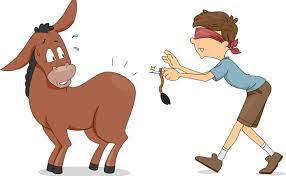
Third Picture: Pin the tail on the donkey
Fourth Picture: The Farmers in his den
Birthday Party Games When I was a child birthday parties were fairly small affairs and were always held in the birthday child’s home with a handful of their schoolmates and young relatives invited. We always had a birthday tea and a cake with candles on it and the rest of the time was filled with party games. It’s interesting that some games we are very familiar with from childhood, appear in similar forms all over the world. Are there reasons why we play them which are common to all people? A lot of these games have a different appearance due to the culture they’re from, but are constructed in the same fashion Blind Man’s Buff A version of the game was played in Ancient Greece where it was called “copper mosquito.” The game is played by children in Bangladesh where it is known as Kamanchi meaning blind fly. One individual is blind-folded in order to catch or touch one of the others who run around repeating, “The blind flies are hovering fast! Catch whichever you can!” The game was played in the Tudor period, as there are references to its recreation by Henry VIII’s courtiers. It was also a popular parlour game in the Victorian Era. I have recently learned that the name of the game is now considered offensive by some and that the blindfolding of a child can be looked on as dangerous. Musical Chairs The origins of the game’s name as “Trip to Jerusalem” is disputed. However, it is known to come from its German name Reise Nach Jerusalem (“The Journey to Jerusalem”). One theory suggests that the name was inspired by The Crusades wherein several heavy losses were incurred. Pin the Tail on the Donkey Pin the tail on the donkey is a game played by groups of children. The earliest version listed in a catalogue of American games compiled by the American Game Collectors Association in 1998, is dated 1899, and attributed to Charles Zimmerling. My parents bought a a commercial set complete with a picture of a donkey and a fabric tail and then we all had a go at pinning the tail on the donkey. Pass the Parcel Research tells us that this is of British origin unlike Blind Man’s Buff which crops up in many cultures. Back in the 1950s the music was either played on a gramophone or on a piano. The parent operating the stop-start music kept a careful eye on the passing of the parcel to make sure everyone had a turn and to ensure that the birthday child was not the one to open the last layer which contained the prize. Back then it was something small like a chocolate bar. Musical Statues It seems that this game appears in various countries and has quite a long history. Some countries know it was Freeze Dance or Frozen Statues. Some homes had a parent who played the piano and some had a gramophone with a parent lifting the stylus – just like Pass the Parcel and Musical Chairs. Spin the Bottle/ Plate On a personal note, I absolutely hated forfeit games! At some of the bigger parties like village parties there was the dreaded spin the plate/ bottle game. If the bottle finished its spin pointing to you or if you spun the plate and didn’t get back to your seat in the circle you had to do a forfeit. This usually involved having to sing a song, recite a poem or do something like hop around the room. My worst nightmare!! The Farmers I his den A version of tag where the children all stand in a circle and one is designated the farmer and he has to walk round the outside of the circle and then taps one child on the shoulder, a race around the ring then ensues to see who can get back to the space first. These were the days of innocence! Stay in touch Peter GSSeditor@gmail.com

Thursday, 9 November 2023

Web Page 3075 9th November 2023 First Picture: Ronson Lighter Fuel
Second Picture Elbow patches
Third Picture: Rolls Razor
Fourth Picture: Bay Rum
Memories of my father The first things that come to mind are white collar stubs. Until the advent of the attached collar my father always used collar studs. One, a larger one, went into the back of the collar and the shirt. There was also a smaller stud which fixed the front of the collar. In fact, my father, for the rest of his life had a mark near his Adams apple caused by this particular stud. My father always wet shaved so there was always lingering small of Old Spice about him; and talking of perfumes after had been to the barbers in the back of Jarmans tobacconists, in Drayton, run by Mr and Mrs Keyes, he always smelt of Bay Rum. I also remember that he also owned a compact Rolls Strop razor in its own silver coloured box. I remember him standing in the bathroom running the razor up and down the red and black strop to sharpen the blade. My father also smoked and collected the coupons out of the Kensitas packs so his clothes always smelt of smoke which was also permeated with the delicate smell of Ronson Liger Fuel. He also smoked Manakin small cigars but only at Christmas, He always kept a small Ronson petrol lighter in a small brown leather pouch in his pocket; to fill the lighter Ronson petrol was poured into the base through a screw and he always kept a silver threepenny bit in the pouch to unscrew the filler. Another thing that I remember was the way my mother sewed on leather patches onto the elbows of his jackets when they got a bit worn, she also sewed leather linings around the cuffs of his jackets for the same reason. My father was no cobbler but when it came to putting stick on soles or heels onto won out shoes he would take himself off to Woolworths in Cosham High Street and buy the required items, which he would bring home and take into the shed where he would hammer and glue the soles etc onto the offending shoes using a metal last. I still have that last stored away in my own shed. If the repair was beyond him the shoes would be taken to the cobbler on the south side of the Havant Road in Farlington. One part of my father’s life that I never knew much about until after he had died was his life as a Masonic Mason. After his death I came across a small brief case which contained all his regalia. It appears he joined the Masons whilst he was working in Ceylon for two years in the 1950’s and looking at the regalia once he moved back to the UK he became a member of two different Lodges. In the brief case were two different aprons and collars, several Masonic medals and a pair of white cotton gloves. My father never asked me to join and a lot of the things in the case where strange to me. The problem was what to do with all this stuff after he died, luckily, I managed to contact another Mason who took the regalia back to the Lodge and I believe it was then recycled to new members. His masonic membership also explained why in the wardroom he kept an evening suit and black bow tie. Stay in touch, maybe you have some memories of your parents that you would like to share. Peter gsseditor@gmail.com

Wednesday, 1 November 2023

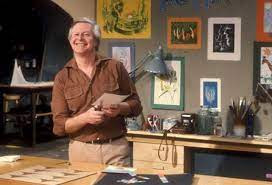
Web Page 3073 2nd November 2023 First Picture: Tony Hart
Second Picture Vision On
Third Picture: Tony Harts daughter
Fourth Picture: With Morph
Norman Antony Hart was born on 15th October 1925 He initially served as an officer in a Gurkha regiment until the start of Indian independence. After this he became involved in children's television from the 1950s, working on the BBC's Blue Peter for a few years before fronting a series of children's art programmes, including Vision On, Take Hart and Hartbeat. His contributions to children's television include the of the ship logo used by Blue Peter and the show's badges, and the animated character of Morph, who appeared beside him on his programmes following his introduction in the 1970s. He was born in Hastings Road, Maidstone and was interested in drawing from an early age. He attended All Saints, Margaret Street Resident Choir School and then Clayesmore School in Iwerne Minster, Dorset, where art was his best subject. Tony Hart left school in 1943 and wanted to join the Royal Air Force, but as he would have been unable to fly owing to slightly deficient eyesight, he followed in his father’s footsteps and joined the British Indian Army instead where he gained an officers' commission in the 1st Gurkha Rifles. However, when he was told that lower-ranked British officers would be replaced by Indian officers following Indian independence, he decided to return to civilian life. The outbreak of the Korean War (25 June 1950) saw him being re-commissioned in the Territorial Army, attached to the Royal Artillery, from 23 November 1948 to 1 July 1950. After being demobilised, he decided to become a professional artist and studied at Maidstone College of Art, He graduated in 1950 and, after working as a display artist in a London store, became a freelance artist His break into broadcast television came in 1952, after his brother persuaded him to attend a party where he met a BBC children's television producer. After an interview in which he drew a fish on a napkin while the producer was looking for paper, He became resident artist on the Saturday Special programme. Subsequent television shows included Playbox (1954–59), Tich and Quackers (1963-), Vision On (1964–76), Take Hart (1977–83), Hartbeat (1984–93), Artbox Bunch (1995–96) and Smart Hart (1999–2000 From the 1970s, he often appeared alongside the animated Plasticine stop-motion character Morph, created by Peter Lord of Aardman Animations. Tony Hart was a regular face on the BBC children's programme Blue Peter in the 1950s and presented a number of programmes in 1959. As well as demonstrating small-scale projects (the type that viewers might be able to do) he also created large-scale artworks on the television studio floor, and even used beaches and other open spaces as 'canvases'. A regular feature of his programmes was The Gallery, which displayed artworks sent in by young viewers. Hart also created the original design for the Blue Peter badge, also used as the programme's logo. He originally asked for his fee to be paid as a royalty of 1d for each badge made, but was offered a flat fee of £100. The badges are famous throughout the United Kingdom and have been coveted by successive generations of Blue Peter viewers. The ink and watercolour galleon, believed to be the inspiration for the Blue Peter logo and badge, was originally drawn by Tony Hart for "Hooray for Humpty-Dumpty" on Saturday Special, in 1952. He received two BAFTA awards. His first, for Best Children's Educational Programme, came in 1984 for Take Hart, and he was given a Lifetime Achievement Award in 1998. He retired from regular TV work in 2001.[3] He met his wife, Jean Skingle, while working in television; they married in 1953[ They were married for fifty years until she died in 2003. They had a daughter, Carolyn, and two grandchildren. On 28th December 2006, it was announced during the reunion programme It Started with Swap Shop that Tony Hart was in poor health, though this was not elaborated upon until an interview with The Times published on 30 September 2008, revealing that two strokes had robbed him of the use of his hands and left him unable to draw. He peacefully on 18 January 2009 at the age of 83. His funeral took place in the village of Shamley Green, where he had lived for more than forty years and he was buried in the churchyard of Christ Church. Stay in Touch Peter gsseditor@gmail.com