Total Pageviews

Translate

Thursday, 1 March 2018

Web Page No 2454

5th March  2018

First Picture: Kensitas Cigarettes
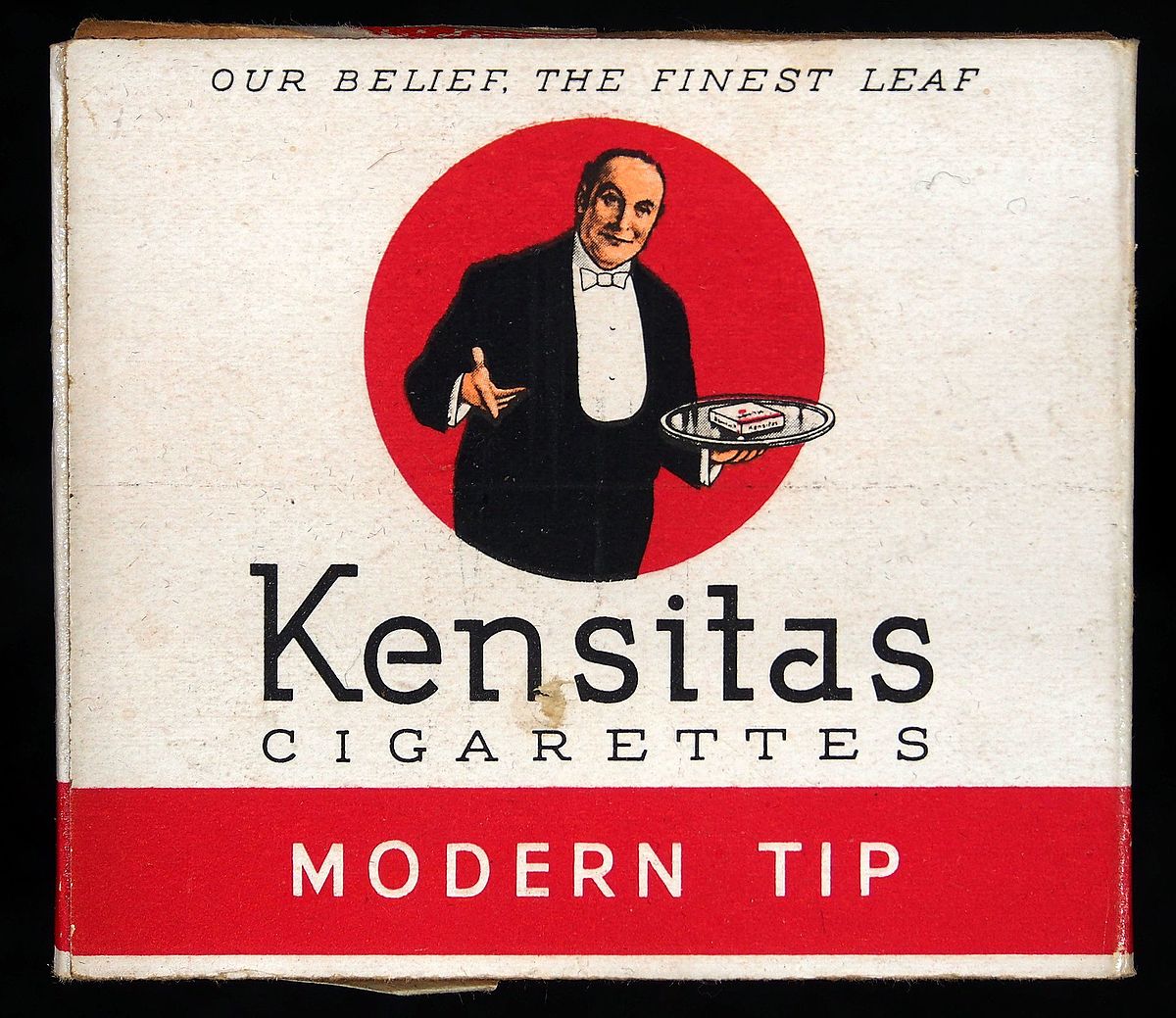
 Second Picture: Kensitas Coupon

Third Picture: Wild Woodbines
 Fourth Picture: The famous ‘Lonely Man’ advert for Strand


Fifth Picture: Traditional Players Cigarettes

1960s cigarette culture
Cigarette smoke was part of the background of everyday life in the sixties. Most men and women lit up and children as young as ten took up smoking for the first time. Although most people had a vague awareness of the health risk, only a minority gave up smoking.
The first health warning came in 1950 when Professor Sir Richard Doll's research linked cancer with smoking. However, his report was for the medical establishment and it took Doll another four years to convince the doctors. Reports that smoking might be less than healthy started to appear in the press in fifties and people knew about the 'cancer scare'.

The Royal College of Physician's Report 'Smoking and Health' in 1962 was a sell out. But after the fuss died down, it failed to change many people's minds on the issue. Government health campaigns were even less effective.

Filter cigarettes
Health concerns did, however, influence smokers. From the late fifties many people switched to filter cigarettes. Although people thought filter cigarettes were healthier, there was little evidence that they were any safer than plain cigarettes.
For many, economic considerations played a part. The Government increased tobacco duty significantly to reduce the popularity of smoking and filter cigarettes used less tobacco. The space taken by the filter was not taxed, so filter brands were significantly cheaper.
Cigarette coupons
The other big change in smoking habits was an old idea re-introduced. The tobacco industry was dominated by the giant Imperial Tobacco (Wills and Player's). In an attempt to gain market share, smaller rival Wix introduced cigarette coupons with their Kensitas brand in 1956. Coupons were given away with the cigarettes and could be exchanged from free gifts, similar to the Green Shield Stamps scheme. I remember my father collected these!
Coupons were not new. The tobacco companies had used them in the 20s and 30s, but a coupon war saw such expensive gifts given away that some in the industry thought they were selling gifts rather than cigarettes. A mutual agreement not to trade coupons expired in 1956 allowing Wix to revive them.
Embassy Filter
By the early sixties Wills' market leading Woodbine cigarettes, the working man's favourite and one of the first mass market cigarette brands, was losing market share. It was seen as an old man's product and as a plain cigarette, although in the smallest size, it was relatively expensive.
Kensitas 'Modern Tip' range were bigger, looked classier and gave away coupons. Wills tried and failed with two new brands, Bristol and Strand. Strand famously flopped with the lonely man campaign. The theme tune from the ad was a hit record, but no one wanted a product for loners.
Wills succeeded with their next attempt, Embassy. Embassy was launched in 1962. It was marketed with coupons and was a larger cigarette available as plain or filter. This size of cigarettes were seen as a mid market, more middle class product.The Embassy Filter brand took the market by storm. It quickly became Britain's number one cigarette.
Part of the skill of the marketing campaign was to appeal to men and women equally. Cigarette sales to men peaked just after the War, but women were catching up with men in the 50s and 60s. Paradoxically as some men quit, many women saw smoking as liberating.
Embassy smokers were younger people, often enjoying a night out. The traditional working man smoking his Woodbines and drinking mild was ousted by younger men drinking Watneys Red Barrel and smoking Embassy.
Player's No 6
Player's, Wills in-house rival, also saw their traditional best-selling brand Player's Medium. Player's Medium with its famous 'hero' sailor on the pack was a top seller in the 30s and 40s. It also lost out in the changes that were taking place in the 50s. It too was a plain, rather than a filter brand, but targeted the middle class, rather than working class market and appealed to women and well as men.
Player's new brand for the 60s, Player's No 6, was launched in 1965. Number 6 meant nothing, it was dreamed up by the marketing men at Imperial. It was a smaller brand, like Woodbine, but was predominately a filter brand. It was targeted equally at women as well as men. Player's No 6, challenged Embassy for the number one spot in the latter years of the 60s. Player's No 6 had a strong following with female smokers. In the 1971 film, Get Carter, Jack Carter's niece, Doreen, who worked in Woolworths, smoked Player's No 6.
King Size
With Imperial brands dominating the cheap and mid-priced sectors, there was more room to compete at the top of the market. Changes in smoking taste happened quickest with more affluent smokers and by the late fifties there was a small, but growing market for King Size filter cigarettes. Carreras, the third largest cigarette manufacturer, launched Rothmans King Size in 1957. It quickly became a market leader and they confidently advertised it as 'the best tobacco money can buy'.
Pure Gold from Benson and Hedges
Gallaher, Britain's second largest cigarette manufacturer, was also squeezed by Imperial but they took on Carreras' Rothmans King Size with new brand, Benson and Hedges Special Filter, in 1962.
Like Wills' Embassy it was a superb piece of marketing and packaging. The innovative new gold pack, which bore the Royal Warrant, suggested that the contents were of value. These two brands competed head to head, but B&H Special Filter had the edge and it overtook Rothmans King Size in sales by 1965. However, Rothman's was still seen as the number one middle class brand in the 60s.
Silk Cut
Silk Cut, launched in 1964, showed a remarkable anticipation of future trends. it was one of the first mild cigarettes. The original 1960s' version was not particularly mild by later standards, but had significantly lower tar and nicotine ratings to rivals. It was not a huge seller, but established a reputation as a modern middle class brand. Although there is strong evidence to suggest mild cigarettes offer no health benefits over stronger ones, mild cigarettes took off in the 70s and 80s as people became more concerned about smoking and health.
In conclusion
The majority of cigarette brands that we know today were around in the sixties and many were new brands in that decade. Come the early 70s there was an awakening to the dangers of smoking and from then on everything changed..
Keep in touch

Yours

Peter

gsseditor@gmail.com

Mary Writes:-


I was very interested in last week’s blog. I remember it all so well. I don`t if you remember Pauline McKinley, who was at Solent Rd. Her father was a friend of Buster Crabbe, and always said that no way was he a spy/ traitor, which some newspapers reported. Apparently, he was very patriotic. I don`t think that in our lifetime we will ever know the truth. Kruschev and Bulgarin came to the UK at the same time as the Russian ships visited Portsmouth. There was a lot going on. Later on it was a case of keeping quiet unless you wanted a diplomatic row. My parents are buried in the same cemetery but I haven`t seen Buster`s grave. Until a few years back, flowers appeared once a year on his grave and nobody was ever seen leaving them. I suppose the person died. What a mystery?   


News and Views:


ON THIS DAY 5th March 1960-1965

On 05/03/1960 the number one single was Why - Anthony Newley and the number one album was South Pacific Soundtrack. The top rated TV show was The Larkins (ATV) and the box office smash was Psycho. A pound of today's money was worth £13.68 and Burnley were on the way to becoming the Season's Division 1 champions.

On 05/03/1961 the number one single was Walk Right Back/Ebony Eyes - Everly Brothers and the number one album was South Pacific Soundtrack. The top rated TV show was No Hiding Place (AR) and the box office smash was One Hundred and One Dalmations. A pound of today's money was worth £13.25 and Tottenham Hotspur were on the way to becoming the Season's Division 1 champions.
On 05/03/1962 the number one single was Rock-a-Hula Baby/Can't Help Falling In Love - Elvis Presley and the number one album was Blue Hawaii - Elvis Presley. The top rated TV show was Coronation Street (Granada) and the box office smash was Lawrence of Arabia. A pound of today's money was worth £12.89 and Ipswich Town were on the way to becoming the Season's Division 1 champions.

On 05/03/1963 the number one single was The Wayward Wind - Frank Ifield and the number one album was Summer Holiday - Cliff Richard & the Shadows. The top rated TV show was Coronation Street (Granada) and the box office smash was The Great Escape. A pound of today's money was worth £12.64 and Everton were on the way to becoming the Season's Division 1 champions.

On 05/03/1964 the number one single was Anyone Who Had a Heart -Cilla Black and the number one album was With the Beatles - The Beatles. The top rated TV show was Coronation Street (Granada) and the box office smash was Dr Strangelove. A pound of today's money was worth £12.24 and Liverpool were on the way to becoming the Season's Division 1 champions.

On 05/03/1965 the number one single was I'll Never Find Another You - Seekers and the number one album was Rolling Stones Number 2 - The Rolling Stones. The top rated TV show was Coronation Street (Granada) and the box office smash was The Sound of Music. A pound of today's money was worth £11.69 and Manchester United were on the way to becoming the Season's Division 1 champions. The big news story of the day was First public talking computer.


Thursday, 22 February 2018

Web Page No 2452

26th February  2018
 First Picture: Buster Crabbe
 Second Picture: Soviet Ships tied up in Portsmouth

Third Picture: Buster Crabbe’s Grave


Fourth Picture: One of the many books about Buster Crabbe

Buster Crabb

Lionel Kenneth Phillip CrabbOBEGM  was born on 28th January 1909  and presumed dead on 19th April 1956) and was a Royal Navy frogman and MI6 diver who vanished during a reconnaissance mission around a Soviet cruiser berthed at Portsmouth Dockyard in 1956.
Lionel Crabb was born in 1909 to Hugh and Beatrice Crabb of Streatham. They were a poor family and in his youth Buster held many jobs but after two years training for a career at sea in the school ship HMS Conway he joined the merchant navy and the Royal Naval Volunteer Reserve before the Second World War.
At the outbreak of the Second World War, he was first an army gunner. Then, in 1941, he joined the Royal Navy. The next year he was sent to Gibraltar where he worked in a mine and bomb disposal unit to remove the Italian limpet mines from the hulls of Allied ships. Initially, his job was to disarm the mines that British divers removed, but eventually he decided to learn to dive.
On 8th December 1942, during an Italian attack, two of the Italian frogmen probably killed by depth charges. Their bodies were recovered, and their swimfins and Scuba sets were taken and from then on one set was used by Commander Crabb.
He was awarded the George Medal for his efforts and was promoted to lieutenant commander. In 1943 he became Principal Diving Officer for Northern Italy, was assigned to clear mines in the ports of Livorno and Venice; he was later created an OBE for these services. By this time he had gained the nickname "Buster", named after American actor and swimmer Buster Crabbe. After the war he was stationed in Palestine and led an underwater explosives disposal team that removed mines from the maritime force of the Palmach the elite Jewish fighting force. In 1947, he was demobilised.
He moved to a civilian job and used his diving skills to explore the wreck of a Spanish galleon from the 1588 Armada, off Tobermory. He then located a suitable site for a discharge pipe for the Atomic Weapons Research Establishment at Aldermaston. He later returned to work for the Royal Navy. He twice dived to investigate sunken Royal Navy submarines, the Truculent in January 1950 and  Affray in 1951 to find out whether there were any survivors. Both efforts were fruitless. In 1952 Crabb married Margaret Elaine Player but the couple separated in 1953 and divorced two years later.
In 1955 he took frogman Sydney Knowles with him to investigate the hull of the Soviet cruiser Sverdlov to evaluate its superior manoeuvrability. According to Knowles, they found a circular opening at the ship's bow and inside it a large propeller that could be directed to give thrust to the bow. That same year, March 1955, he was made to retire due to his age, but a year later he was recruited by MI6. By this point, his heavy drinking and smoking had taken its toll on his health, and he was not the diver that he had been.
In 1956 MI6 recruited him to investigate the Soviet cruiser Ordzhonikidze that had taken  Khrushchev and  Bulganin on a diplomatic mission to Britain. Crabb was sent to investigate the Ordzhonikidze's propeller, a new design that Naval Intelligence wanted to examine. On 19th April 1956, Crabb dived into Portsmouth Harbour and his MI6 controller never saw him again. His companion in the Sally Port Hotel took all his belongings and even the page of the hotel register on which they had written their names. Ten days later British newspapers published stories about his disappearance in an underwater mission. MI6 tried to cover up this espionage mission. On 29th April the Admiralty announced that Crabb had vanished when he had taken part in trials of secret underwater apparatus in Stokes Bay . The Soviets answered by releasing a statement stating that the crew of the Ordzhonikidze had seen a frogman near the cruiser on 19th April.
British newspapers speculated that the Soviets had captured him and taken him to the Soviet Union. The British Prime Minister  disapproved of the fact that MI6 had operated without his consent
A little less than 14 months after Crabb's disappearance, on 9th June 1957, a body in a diving suit was brought to the surface in their net by two fishermen in Chichester Harbour. The body was missing its head and both hands, which made it impossible to identify (using then-available technology). The body had the same height as Crabb, the same body-hair colour, and was dressed in the same clothes. It was stated that given the length of time that the body had been in the water, there was "nothing sinister" about the missing head and hands. Crabb's ex-wife was not sure enough to identify the body, nor was Crabb's girlfriend Pat Rose. The body was in a faded green rubber frogman suit of a type issued to Royal Navy divers, and the remains of a white sweater. The suit had been cut open from the neck to the groin and along both legs. The body was closely examined for a Y-shaped scar behind the left knee and a prominent scar on the left thigh. There were no scars on the body.
The inquest was opened on 11th June 1957 and adjourned until 26th June to allow time for a positive identification. When it was resumed the pathologist reported that he had found a scar in the shape of an inverted Y on the left side of the left knee, and a scar on the left thigh.
As information was declassified under the 50-year rule new facts on his disappearance came to light. Crabb did not dive alone on his fatal last mission: He was given him a buddy diver. Furthermore, other  papers indicate that there were other divers investigating the Ordzhonikidze  in Portsmouth Harbour. 
The spy Harry Houghton wrote a book called "Operation Portland" the explanation of Crabb's death which he claimed to have been given by his Russian handler in July 1956. He claims that shortly before the Soviet visit he had been meeting in a pub in  Dorset
The Russians were aware of attempts by divers around the Ordzhonikidze, the Soviet Navy arranged for six underwater sentries to watch the bottom of the ship, which had been fitted with wire jackstays on either side to help them hold on to. When Crabb arrived, a struggle ensued in which Crabb's air supply was turned off and he passed out. He was then hauled on board, and taken to the sick bay and given medical treatment. When he had recovered, the Soviets began to interrogate him; Crabb was making a confession when he collapsed and this time did not recover. The Soviets, aware that they might be accused of causing his death, decided to fix his body lightly to the bottom of the ship so that it came loose once the ship was under way. In the event, the body entangled in something underwater which meant it did not get discovered for fourteen months.
In a 1990 interview a former member of Soviet Naval intelligence, claimed that the Soviets had noticed Crabb in the water and that a Soviet sniper had shot him. Official government documents regarding Crabb's disappearance are not scheduled to be released until 2057.
On 16th November 2007, the BBC  reported that a Soviet frogman, claimed to have caught Crabb placing a mine on the Ordzhonikidze hull near the ammunition depot and cut his throat. For which he was awarded the Order of the Red Star medal. 
Certain MPs became concerned about Crabb's fate and in 1961, submitted proposals to re-open the case but were rebuffed.
On 26 March 2006, the Mail on Sunday published an article entitled "Buster Crabb was murdered – by MI5" because they knew he had intentions of defecting 
A British diving expert wrote in 2007 that Crabb had probably died of oxygen poisoning or perhaps carbon dioxide poisoning, and that Crabb's age and poor health caused by his heavy drinking and smoking had made him unsuitable for the mission. In support of the death by misadventure theory, it was noted that before disappearing on his second attempt to dive the Ordzhonikidze, Crabb had during his first attempt experienced equipment failure, which suggested that Crabb's equipment was not up to standard. Crabb's MI6 officer always took the view that Crabb had suffered equipment failure and/or his health had given way, and that his reputation had been unfairly dragged through the mud.
Whatever was the truth the headless body which was alleged to be Buster Crabbe was interred with all due ceremony in Milton Cemetery.
Will we ever know the truth?   

Keep in touch

Yours

Peter

gsseditor@gmail.com

You Write:


News and Views:


ON THIS DAY 26th February 1960-1965

On 26/02/1960 the number one single was Why - Anthony Newley and the number one album was South Pacific Soundtrack. The top rated TV show was not listed and the box office smash was Some Like It Hot. A pound of today's money was worth £13.68 and Burnley were on the way to becoming the Season's Division 1 champions. The big news story of the day was USSR wins Winter Olympics
On 26/02/1961 the number one single was Sailor - Petula Clark and the number one album was Tottenham Hotspur. The top rated TV show was The Army Game (Granada) and the box office smash was One Hundred and One Dalmations. A pound of today's money was worth £not very interesting and 13.25 were on the way to becoming the Season's Division 1 champions. The big news story of the day was Bootsie & Snudge (Granada).

On 26/02/1962 the number one single was Rock-a-Hula Baby/Can't Help Falling In Love - Elvis Presley and the number one album was Blue Hawaii - Elvis Presley. The top rated TV show was Coronation Street (Granada) and the box office smash was Lawrence of Arabia. A pound of today's money was worth £12.89 and Ipswich Town were on the way to becoming the Season's Division 1 champions. The big news story of the day was John Glenn is 1st US astronaut to orbit earth.
On 26/02/1963 the number one single was The Wayward Wind - Frank Ifield and the number one album was Summer Holiday - Cliff Richard & the Shadows. The top rated TV show was Labour Party Political Broadcast (all channels) and the box office smash was The Great Escape. A pound of today's money was worth £12.64 and Everton were on the way to becoming the Season's Division 1 champions.
On 26/02/1964 the number one single was Diane - Bachelors and the number one album was With the Beatles - The Beatles. The top rated TV show was Labour Party Political Broadcast (all channels) and the box office smash was Dr Strangelove. A pound of today's money was worth £12.24 and Liverpool were on the way to becoming the Season's Division 1 champions.
On 26/02/1965 the number one single was I'll Never Find Another You - Seekers and the number one album was Rolling Stones Number 2 - The Rolling Stones. The top rated TV show was Coronation Street (Granada) and the box office smash was The Sound of Music. A pound of today's money was worth £11.69 and Manchester United were on the way to becoming the Season's Division 1 champions.The big news story of the day was Goldie the Eagle escapes London Zoo.


Thursday, 15 February 2018

Web Page No 2450

19th February  2018

First Picture: Peter Dimmock

 Second Picture: Peter Dimmock Football Album


Third Picture: Polly Elwes


Peter Harold DimmockCVOCBE

For anyone who watched sports programmes on the BBC during the 1950s and 1960s Peter Dimmock was a familiar face as he was a sports broadcaster and senior television executive during the formative years of the television in the 1950s. He was the first host of the BBC's long-running Grandstand and of the BBC Sports Personality of the Year awards.
He was born in London on 10th December 1920 and attended Dulwich College and then a finishing establishment in France. At the outbreak of the war he joined the Royal Army Service Corps, a territorial unit. He was called up only two months later to serve in France during the retreat from Dunkirk. In March 1941 he was allowed to transfer into the Royal Air Force and qualified as a Pilot Officer. Then in 1943 he became a flying instructor on Tiger Moth and Miles Magister trainers with the rank of Flight Lieutenant. In February 1944 he was appointed as a staff officer at the Air Ministry. After he was demobilised he joined the Press Association and later the BBC in March 1946, around the time the television service was revived, as the head of the service's outside broadcasts.
He organised the 70 hours of outside coverage of the 1948 London Olympics and the following year he was the commentator on the University Boat Race. As head of outside broadcasts, Peter Dimmock was in charge of events such as the Queen's Coronation. But the broadcast had nearly not happened at all, for when the BBC first formally applied to the Earl Marshal, the Duke of Norfolk, for permission to cover the Coronation on live television, the answer was a flat no. Churchill, then prime minister, asked why the public should not have as good a view as he would. At 32, it was Peter Dimmock who won the authorities over with a technical demonstration inside Westminster Abbey. He showed how unobtrusive coverage could be, with lighting at an acceptable level and the television cameras inside the Abbey virtually invisible.

He was also in charge of the first televised Grand National in 1960. He continued to be Head of Outside Broadcasts until leaving the BBC in 1972.
In a parallel career to radio, Dimmock launched a televisual coverage from April 1954 in front of the cameras as the host of a new sport news programme Sportsview (which became Sportsnight in 1968), with what would be a long-running Speedway series. In its first year the series featured Roger Bannister's record breaking four-minute mile run. The BBC's Sports Personality of the Year award also started in 1954 – with Peter Dimmock again taking the presenter role, which he was to continue for over a decade.
Having presented Sportsview for over four years, he fronted the first two shows of Grandstand in October 1958 before handing over to David Coleman. He presented his final Sportsview in 1964 and took up several other roles within the BBC until he left in 1977.
He married BBC continuity announcer and panellist Polly Elwes in March 1960; she died on 15th  July 1987 from bone cancer.- They had three daughters, Amanda, Christina and Freya. In 1962 their home in Campden Hill Gardens, Kensington, west London, was featured in an article in Homes & Gardens magazine
Polly Elwes, was born Mary Freya Elwes  on 29th  February 1928 and she was a BBC Television in-vision announcer from 1957 to 1960. She had attended the Central School of Speech and Drama, which is now a part of the University of London. She was a reporter on the BBC news programme Tonight from 1959 to 1962. She was also a panellist on BBC TV's What's My Line? from 1959 to 1960 and Face the Music from 1971 to 1974. She was also a contributor to the BBC TV programme What's New? in 1962–63.

On 8th June 1990 Peter Dimmok married Christabel Rosamund Bagge. He died on 20th November 2015 at the age of 94.


Keep in touch

Yours

Peter

gsseditor@gmail.com

You Write:


News and Views:


ON THIS DAY 19th February 1960-1965

On 19/02/1960 the number one single was Why - Anthony Newley and the number one album was South Pacific Soundtrack. The top rated TV show was not listed and the box office smash was Some Like It Hot. A pound of today's money was worth £13.68 and Burnley were on the way to becoming the Season's Division 1 champions.The big news story of the day was EMI's last coarse-groove 78 rpm record was issued

On 19/02/1961 the number one single was Are you Lonesome Tonight? - Elvis Presley and the number one album was GI Blues - Elvis Presley. The top rated TV show was No Hiding Place (AR) and the box office smash was One Hundred and One Dalmations. A pound of today's money was worth £13.25 and Tottenham Hotspur were on the way to becoming the Season's Division 1 champions.

On 19/02/1962 the number one single was The Young Ones - Cliff Richard & the Shadows and the number one album was Blue Hawaii - Elvis Presley. The top rated TV show was Coronation Street (Granada) and the box office smash was Lawrence of Arabia. A pound of today's money was worth £12.89 and Ipswich Town were on the way to becoming the Season's Division 1 champions. The big news story of the day was Unknown Sean Connery cast as 007 in Dr No

On 19/02/1963 the number one single was Diamonds - Jet Harris & Tony Meehan and the number one album was Summer Holiday - Cliff Richard & the Shadows. The top rated TV show was Coronation Street (Granada) and the box office smash was The Great Escape. A pound of today's money was worth £12.64 and Everton were on the way to becoming the Season's Division 1 champions.The big news story of the day was Liz Taylor films Cleopatra


On 19/02/1964 the number one single was Diane - Bachelors and the number one album was With the Beatles - The Beatles. The top rated TV show was Steptoe & Son (BBC) and the box office smash was Dr Strangelove. A pound of today's money was worth £12.24 and Liverpool were on the way to becoming the Season's Division 1 champions. The big news story of the day was Malcolm X visits Cassius Clay's training camp

On 19/02/1965 the number one single was Tired of Waiting For You - The Kinks and the number one album was Rolling Stones Number 2 - The Rolling Stones. The top rated TV show was Coronation Street (Granada) and the box office smash was The Sound of Music. A pound of today's money was worth £11.69 and Manchester United were on the way to becoming the Season's Division 1 champions.